
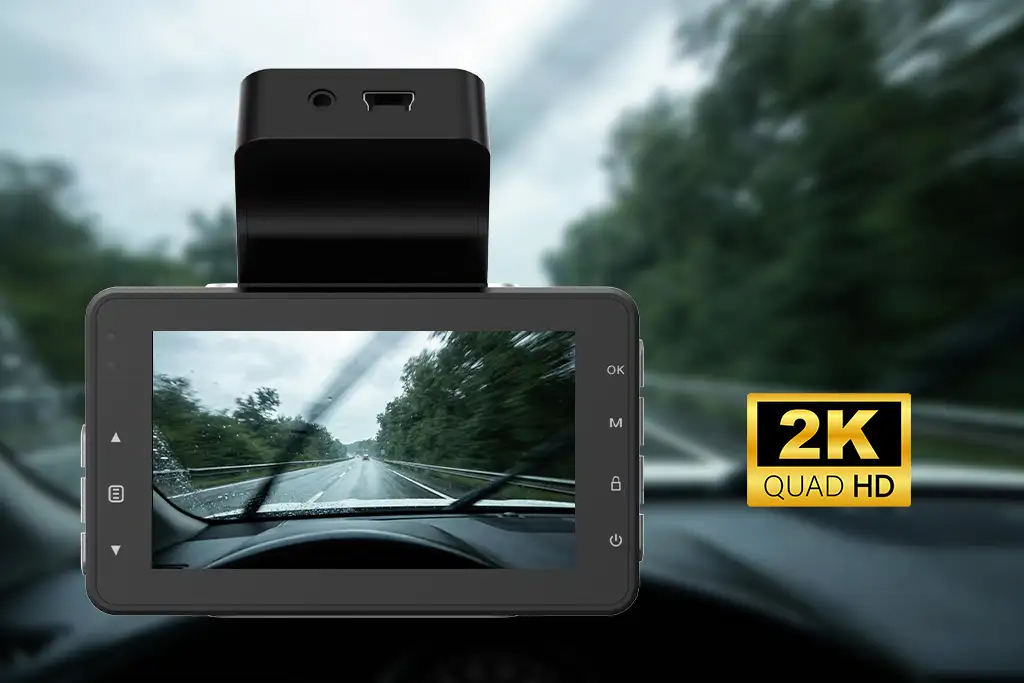
Why Have 2K Dash Cams Become the Mainstream Choice?
Clear User Demand: In the on-board imaging device market, resolution has always been a core concern for consumers—1080P raises fears of insufficient image quality, while 4K comes with worries about storage pressure and budget constraints. As a representative of the mid-range segment, 2K dash cams have gradually become the first choice for most car owners in recent years. They not only make up for 1080P’s shortcomings in capturing fine details but also avoid the high costs and heavy storage burden of 4K, hitting the sweet spot for the practical and sufficient in-vehicle needs of most users.
A 2K dash cam corely refers to an intelligent on-board imaging recording device with a resolution of 2560×1440 pixels (commercially known as 1440P in the industry). It falls into the category of high-definition imaging, positioned between 1080P (Full HD, 1920×1080 pixels) and 4K (Ultra HD, 3840×2160 pixels). With a total of about 3.7 million pixels per frame, it delivers a nearly 78% boost compared to 1080P’s 2.07 million pixels, and can present finer image details with a smooth recording speed of 30 frames per second (fps). The core trait of a 2K dash cam is balance: it strikes the optimal balance across image quality, cost, storage, and power consumption, making it suitable for the daily driving scenarios of the vast majority of car owners, rather than extreme imaging needs.
Great Will Product Recommended:

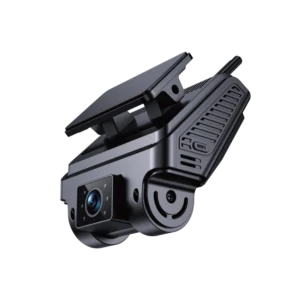
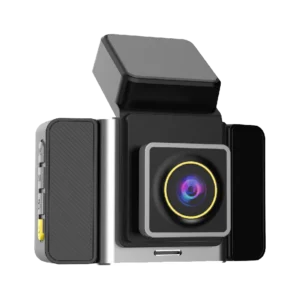
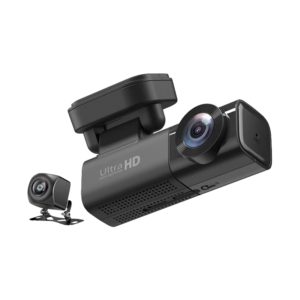
2K vs 1080P vs 4K: How to Choose the Right Resolution?
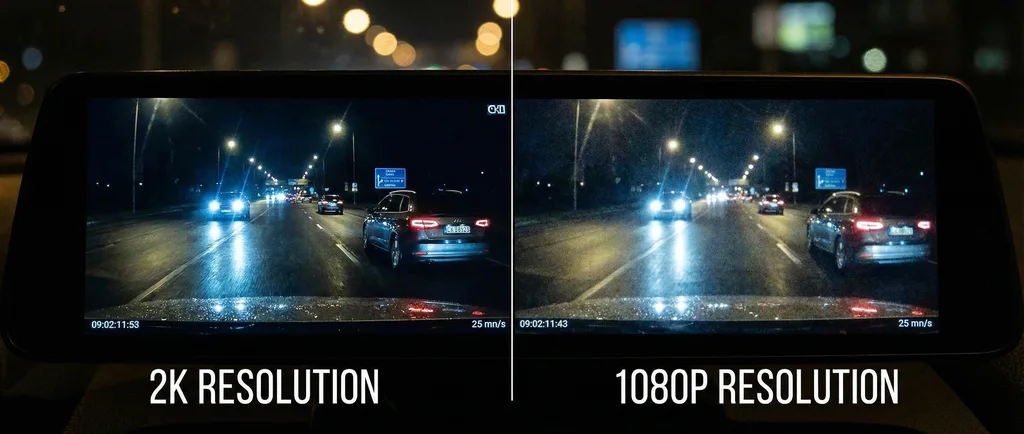
1. 2K vs 1080P: The Gap Goes Beyond Pixels
Detail Capture Capability: 1080P can identify nearby license plates in sufficient light, but the image blurs easily when zoomed in, with more obvious noise at night. 2K, by contrast, preserves more edge details—even when part of the frame is zoomed in, small text on license plates and road signs remains legible.
Note: If budget permits, prioritizing a 2K model is a more forward-looking choice. For users who only need basic evidence recording and have an extremely tight budget, 1080P can serve as a transitional option.
2. 2K vs 4K: Balancing Practicality and Ultimate Performance
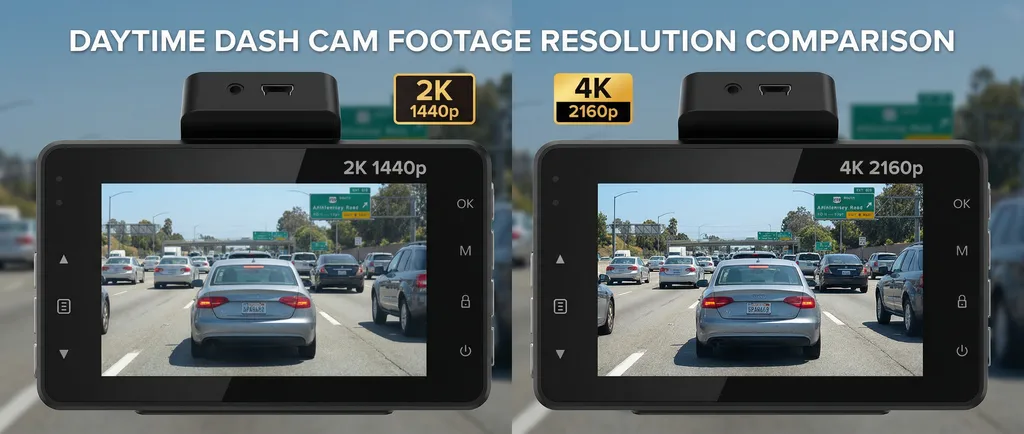
4K’s strength lies in its ultimate detail and better night performance, but its drawbacks are equally prominent: it consumes 1.5 to 2 times more storage than 2K, with a 64GB card only able to record for 4 to 6 hours. 4K models are 30% to 50% more expensive than 2K models with the same configuration, and they have higher requirements for mobile phone performance and memory card speed, which may cause stuttering when playing back or exporting videos.
Note: For daily commuting and occasional night driving, 2K offers a higher cost performance. 4K is a better choice for frequent long-distance night driving, pursuit of ultimate image quality, or professional recording needs.
Buying a 2K Dash Cam: Avoid These Pitfalls for a Cost-Effective Pick
Key Hardware to Check
Don’t focus solely on 2K resolution when buying—core hardware directly determines actual image quality. Prioritize a large aperture with F≤1.8, which lets in more light for clearer night vision. For the image sensor, opt for the Great Will GC Series, which delivers better imaging in low-light conditions. Models with WDR (Wide Dynamic Range) technology can effectively handle backlighting and high-beam glare, preventing overexposure or underexposure in the frame.
Prioritize Practical Functions
Prioritize models with loop recording, emergency lock (automatic video saving upon collision), and parking monitoring—these three are the core essential functions of a dash cam. WiFi hotspot connectivity with mobile phones allows for convenient video export, eliminating the hassle of removing the memory card. Super capacitor models are more heat-resistant than lithium battery ones, making them ideal for hot car interiors in summer and offering a longer service life. There’s no need to blindly pursue fancy extra functions; focusing on practical needs is more cost-effective.
Pitfall Warnings
- Beware of fake 2K models: Some merchants stretch 1080P images and pass them off as 2K. Verify the resolution parameter (2560×1440) and test the actual image quality to avoid this.
- Steer clear of cheap unbranded models: These usually use inferior sensors, resulting in actual image quality that may be worse than genuine 1080P models, with no after-sales support.
- Match the cam with a U3 high-speed memory card (256GB-512GB for large capacity): Slow read/write speeds can cause recording stutters and frame drops.
FAQs About 2K Dash Cams
Q1: Can a 2K dash cam clearly capture license plates at night?
A: It depends on the hardware configuration. A 2K model equipped with a large aperture (F1.5-F1.8), a Sony STARVIS sensor, and WDR technology can clearly identify license plates within 15 meters in ordinary low-light scenarios such as street-lit roads and underground garages. In extreme dark scenarios with no street lights, slight noise may appear, and it becomes more difficult to identify distant license plates.
Q2: Will a 2K dash cam drain a car’s battery significantly?
A: Most 2K models have low power consumption and are powered by the car’s on-board power supply during normal driving, so they won’t drain the battery. If you enable the parking monitoring function, we recommend choosing a model with low voltage protection (automatically powers off when the voltage drops below 11.8V) to avoid battery drain that prevents the car from starting. Super capacitor models are more heat-resistant and have more stable power consumption than lithium battery ones.
Q3: Is a 2K dash cam worth buying?
A: A 2K dash cam is a cost-effective on-board device that caters to the needs of most people. Its core advantage is striking a balance between image quality, cost, storage, and practicality, and it fully meets the core needs of ordinary car owners, such as daily commuting evidence recording, parking monitoring, and short-distance driving recording.




Do you want GPS tracker or dashcam?