
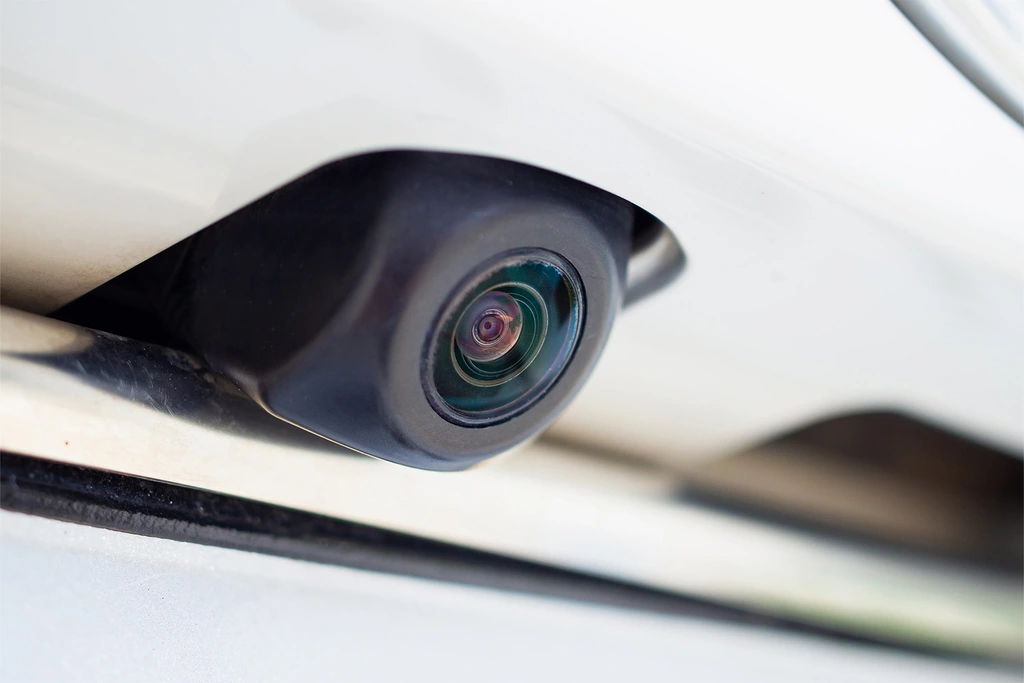
A dash cam has evolved from an optional accessory to essential equipment for drivers. However, many car owners get stuck when choosing between a 2 Channel Dash Cam and a Single Channel Dash Cam. If you pursue all-round safety protection, a 2 Channel Dash Cam is absolutely the better choice! Thanks to its core design of simultaneous front and rear recording, it completely eliminates the fatal flaw of Single Channel Dash Cams—covering only the front and ignoring the rear. Whether you are commuting daily, driving long-distance for self-guided trips, or parking your car, it brings you full peace of mind.
What Is a 2 Channel Dash Cam?
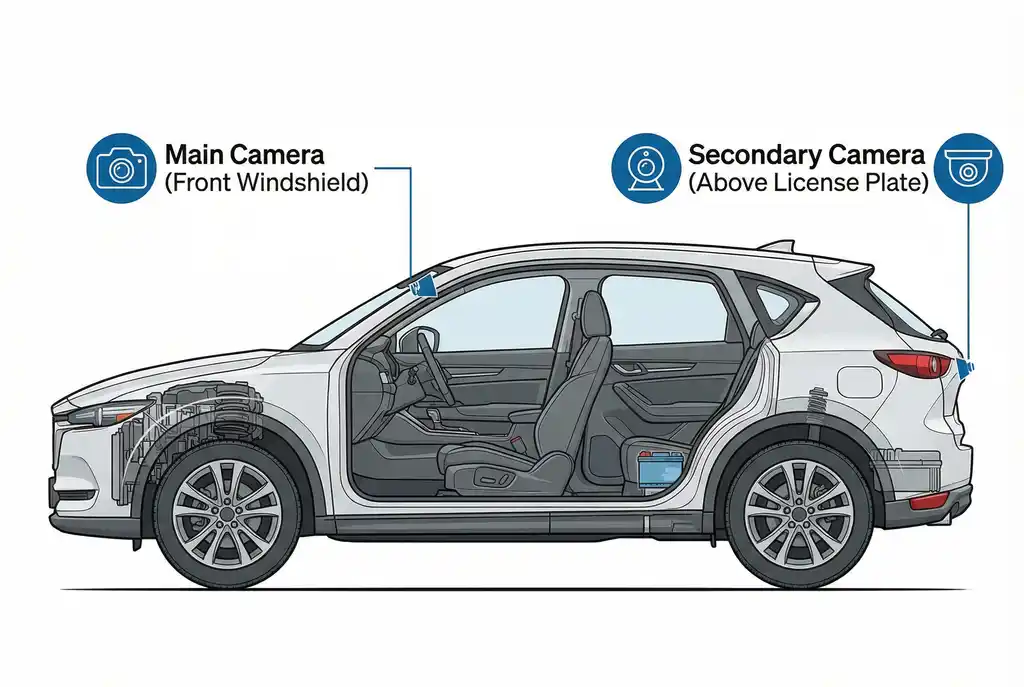
A 2 Channel Dash Cam is a driving recording dashcam equipped with two cameras:
- A main camera is installed inside the front windshield, facing the road ahead, responsible for capturing road conditions in front.
- A secondary camera is mounted at the rear of the vehicle (commonly installed inside the rear windshield or above the license plate outside), recording the rear scene simultaneously.
Its core design logic is eliminating blind spots. The biggest difference from a traditional Single Channel Dash Cam (which only has one front camera) is simultaneous dual-channel recording, covering the critical spots both in front and behind the vehicle at the same time.
Many car owners may think, “A front camera is enough.” But in actual driving, accidents happening behind are often harder to collect evidence for. For example, in a rear-end collision, a Single Channel Dash Cam can only capture your braking action, but cannot prove key information such as whether the rear vehicle was speeding, changing lanes illegally, or driving distractedly. In contrast, the rear camera of a 2 Channel Dash Cam can fully record the entire process before the collision, including the driving status and license plate number of the rear vehicle, making liability determination crystal clear.
A Single Channel Dash Cam provides passive protection, only responding to accidents in front. A 2 Channel Dash Cam, however, offers active protection. By covering the front and rear without dead angles, it minimizes driving risks, making it especially suitable for handling various emergencies in complex road environments.
4 Core Scenarios: How a 2 Channel Dash Cam Solves Your Driving Pain Points
Rear-End Collisions
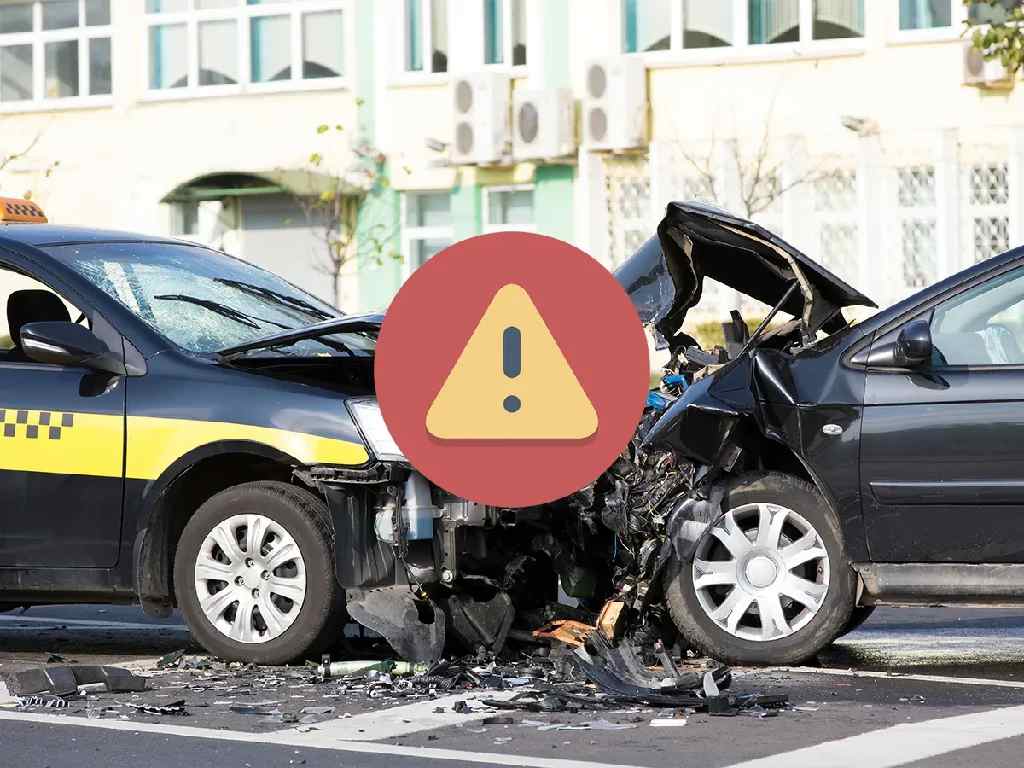
Rear-end collisions are one of the most common traffic accidents, and disputes over liability determination are frequent. The rear camera of a 2 Channel Dash Cam plays a key role here. It can clearly record the driving status of the rear vehicle: whether it maintained a safe distance, was speeding, braked in time before the collision, and whether the license plate number is legible.
For instance, if you are stopped at a red light at an intersection and hit from behind, the rear camera can fully capture the entire process of the rear vehicle approaching from a distance, failing to decelerate in time, and finally colliding. This directly proves that the rear vehicle violated the regulation of maintaining a safe distance, making liability attribution obvious at a glance.
Parking Monitoring
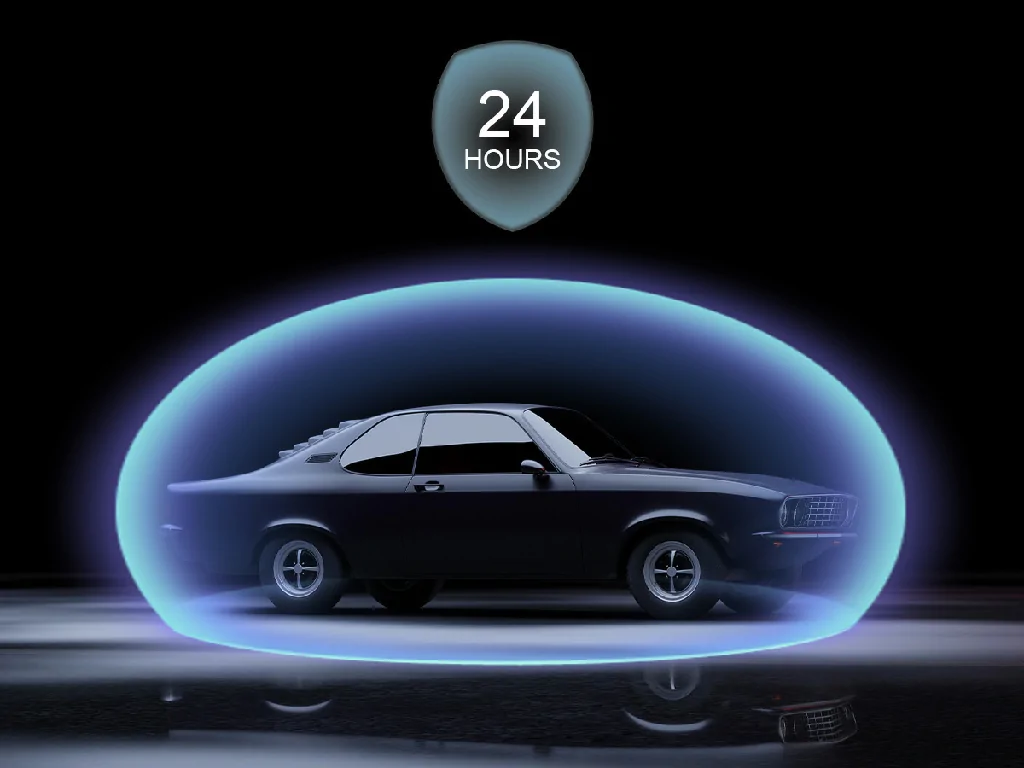
When you park your car in public parking lots such as shopping malls or residential areas, you may find your car scratched when picking it up, but fail to find the at-fault vehicle, leaving you to bear the maintenance costs alone.
A Single Channel Dash Cam stops recording when the vehicle is turned off (if not connected via hardwiring). Even if it supports parking mode, it can only monitor the front and cannot capture scratches on the rear or sides. When a 2 Channel Dash Cam is connected via hardwiring to the fuse box and the parking monitoring mode is enabled, both front and rear cameras enter a standby monitoring state. Once the G-sensor detects a collision or vibration (e.g., being scratched by another vehicle), it automatically starts recording, capturing key information such as the appearance, license plate number, and driving trajectory of the at-fault vehicle. Even if the at-fault vehicle flees on the spot, you can use the video evidence to report to the police and hold them accountable, making hit-and-run drivers have nowhere to hide and minimizing property losses to the greatest extent.
Family/Long-Distance Trips

Drivers not only need to focus on the road ahead but also worry about the condition of family members in the back seat, which may lead to distracted driving and increased safety risks. A 2 Channel Dash Cam solves this problem perfectly:
- The front camera focuses on recording road conditions to ensure driving safety.
- The rear camera (installed inside the rear windshield) monitors the status of the back seat in real time. You can check if the elderly are comfortable or if children are crying via the dashcam screen or mobile app, eliminating the need to turn around frequently and keeping your driving focused.
Meanwhile, the rear camera can also monitor the following distance of vehicles behind and overtaking behaviors, providing early warnings of potential risks, making family long-distance trips safer and smoother.
Ride-Hailing/Freight

For commercial drivers such as ride-hailing drivers and freight owners, evidence protection is particularly important. Ride-hailing drivers may face false complaints from passengers (e.g., “driver took a detour” or “poor service attitude”), and freight owners may encounter liability shirking after cargo damage. A Single Channel Dash Cam cannot provide complete two-way evidence in such cases.
A 2 Channel Dash Cam (some models support an in-car camera) enables full-scene recording of outside + inside the vehicle:
- The front and rear cameras outside the vehicle record road conditions and the boarding/alighting process.
- The in-car camera records passenger behavior and the loading status of goods.
In case of false passenger complaints, the in-car video can restore the truth, if cargo is damaged, the recorded content can prove whether the damage was caused by an accident during transportation or improper loading/unloading. This effectively protects the legitimate rights and interests of practitioners and reduces unnecessary disputes.
Why a 2 Channel Dash Cam Outperforms a Single Channel Dash Cam?
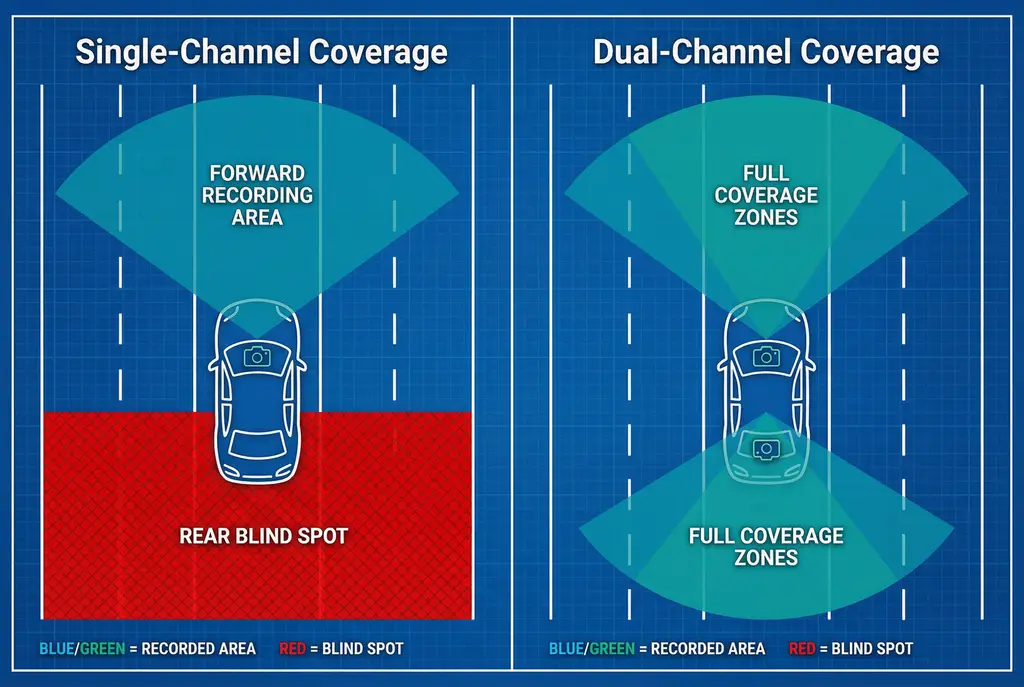
Coverage: Single Channel Covers Only the Front, 2 Channel Covers Front and Rear Without Dead Angles
The core limitation of a Single Channel Dash Cam is its single coverage—it can only record the road conditions directly in front of the vehicle, with no ability to capture scenes behind or on the rear sides. This means that in actual use, in the event of a rear-end collision, rear-side scratch, or other accident, the video evidence from a Single Channel Dash Cam can only prove that the accident happened, but cannot restore how the accident occurred, leaving loopholes for liability determination.
A 2 Channel Dash Cam achieves full vision coverage of front + rear through the simultaneous operation of front and rear cameras. The front camera captures traffic light signals, the driving status of oncoming vehicles, road signs, etc., the rear camera keeps an eye on the following distance of vehicles behind, lane-changing behaviors, and illegal overtaking. Whether you are hit from behind while driving or scratched by a vehicle at the rear while parking, it can be clearly recorded, completely eliminating the evidence collection risks caused by rear blind spots and providing double protection for every trip.
Evidence Collection Capability: Single Channel Provides One-Sided Evidence, 2 Channel Offers a Complete Evidence Chain
In traffic accident disputes, evidence integrity directly determines the efficiency of liability determination. The video evidence from a Single Channel Dash Cam is often one-sided—for example, in a rear-end collision, it can only record your braking trajectory, but cannot prove whether the rear vehicle violated regulations such as failing to maintain a safe distance or speeding.
A 2 Channel Dash Cam provides a complete evidence chain. Taking a common rear-end collision as an example: the front camera records your normal driving and smooth braking, while the rear camera clearly captures the entire process of the rear vehicle approaching from a distance, failing to decelerate in time, and finally colliding. It can even capture details such as whether the rear vehicle driver was using a mobile phone or driving distractedly. These complete video materials are highly persuasive when submitted to insurance companies for claims or provided to traffic police for liability determination, quickly clarifying liability and avoiding unnecessary disputes and losses.
Applicable Scenarios: Single Channel Is Limited to Daily Use, 2 Channel Adapts to Diverse Scenarios
A Single Channel Dash Cam has relatively single applicable scenarios, making it more suitable for car owners who commute daily with simple routes and relaxed road environments, only meeting the basic need of recording road conditions in front.
However, if your travel scenarios are more complex—such as frequently driving on congested urban main roads or highways, parking for a long time in public parking lots, or engaging in commercial driving such as ride-hailing or freight—the limitations of a Single Channel Dash Cam will be exposed.
A 2 Channel Dash Cam, by contrast, adapts to diverse needs:
- For daily commuting: It responds to emergencies such as rear-end collisions and scratches.
- For long-distance self-driving trips: It monitors road conditions ahead and following conditions behind at the same time, reducing the risk of fatigue driving.
- For parking: It uses parking monitoring to capture scratches, hit-and-run accidents, and other incidents.
- For ride-hailing/freight driving: Front and rear recording (some models support an in-car camera) handles false passenger complaints, cargo damage disputes, and other issues.
2 Channel Dash Cam Recommendations: Choose the Right One for Your Budget, Not the Most Expensive
Basic Model: Affordable for All Budgets
- Recommended Specifications: 1080P + 1080P dual-channel recording resolution, basic night vision function, G-sensor, loop recording, Wi-Fi connection.
- Suitable for: Car owners with a limited budget, mainly daily commuters, and those with low requirements for image quality.
2K Dual-Channel + Full Smart Features
- Recommended Specifications: 2K front + 1080P rear, high-performance sensor, HDR night vision, GPS positioning, 5.8GHz Wi-Fi, parking monitoring + low-voltage protection, support for 256GB memory card.
- Suitable for: Car owners pursuing image quality and practicality, frequently driving at night, and those in need of parking monitoring.
2K+2K Dual-Channel + Cloud Storage: All-Round Protection
- Recommended Specifications: 2K+2K dual-channel recording resolution, Dual HDR technology, high-performance dual sensors, 5.8GHz Wi-Fi 6, cloud storage, voice control, touch screen.
- Suitable for: Commercial vehicle owners (ride-hailing, freight), owners of high-end models, and those with extreme requirements for image quality and functions.
FAQ
Q: Can a 2 Channel Dash Cam record front and rear scenes simultaneously?
A: All genuine 2 Channel Dash Cams support simultaneous continuous recording of front and rear cameras. Some models with a screen can also be set to display only the rear image for real-time rear condition checking without affecting front recording.
Q: Will a 2 Channel Dash Cam record non-stop? Will it drain the car battery?
A: Dashcam connected to the cigarette lighter will stop recording when the vehicle is turned off. If connected via hardwiring to the fuse box and parking monitoring is enabled, the dashcam will continue monitoring. However, it is equipped with a low-voltage protection function: it will automatically cut off the power when the battery voltage drops below a safe level, so it will not drain the battery.
Q: When choosing a 2 Channel Dash Cam, should the rear camera be installed inside or outside the car?
A: Choose according to your needs:
Inside the car: Easy to install, no need for waterproofing, and can monitor rear passengers at the same time (suitable for families/ride-hailing drivers). However, image quality may be affected by rear windshield film or stains.
Outside the car: Wider shooting angle, not blocked by glass, clearer image quality, suitable for capturing details of rear vehicles. However, a waterproof model is required, installation is slightly more difficult, and it should avoid blocking the license plate.

Responses
Discussion
0 responses
No responses yet
Start the discussion with a practical question or field note related to this article.