

When sourcing magnetic GPS trackers, the most expensive part isn’t the hardware unit price—it’s the 3-year Total Cost of Ownership (TCO) resulting from choosing the wrong solution. This article breaks down the criteria for key parameters such as battery life, magnetic strength, network standards, and waterproof ratings from a bulk purchasing perspective. It also provides a supplier verification checklist and a 3-year TCO model to help you avoid the “low unit price, high total cost” trap.
·Battery life is not just about mAh; it depends on your update frequency and the actual working days of different modules.
·Devices with a magnetic strength below 30kg are not recommended for high-speed scenarios.
·Sourcing new 2G devices in 2026 means mandatory replacement within 3-5 years; 4G/CAT-M1 is the only logical choice.
·The hardware unit price only accounts for 20-40% of the 3-year TCO, while platform fees and data plans make up the bulk of the cost.
·OEM/ODM customization capabilities determine your upper limit for differentiation as a distributor.
What Are Magnetic GPS Trackers and Why Fleet Buyers Choose Them
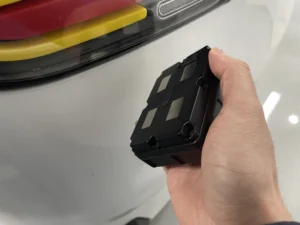
A magnetic GPS tracker is a portable GPS tracking device with a built-in strong magnet that can quickly attach to metal surfaces such as vehicle chassis, trailer frames, and equipment enclosures. Unlike hardwired or OBD-II trackers, magnetic devices require no wiring or vehicle modifications—just place it and use it, take it off and go. Through our experience serving global fleet clients, we found that buyers choose magnetic solutions primarily for the following scenarios:
Zero Installation Cost: No professional installers needed. Deploying a single device takes less than 1 minute, and a 100-vehicle fleet can be completely online within a single day.
Flexible Rotation Between Vehicles: The same device can be quickly transferred between different vehicles or assets, meaning the actual purchase quantity can be lower than the total fleet size.
No Impact on Vehicle Warranty: No wiring, no drilling. Rental fleets are particularly sensitive to this.
Ideal for Project-Based Monitoring: Perfect for seasonal vehicles or short-term construction projects—no long-term commitment required.
Reduced Total Hardware Investment: Through device sharing, 50 devices can easily cover the rotation needs of an 80-vehicle fleet.
According to our project data, magnetic GPS trackers see the highest adoption in these segments: logistics trailer tracking (~35%), construction equipment monitoring (~25%), rental vehicle management (~20%), and other mobile assets (~20%).
Core Evaluation Rule: If you are assessing whether you need a magnetic solution, there is only one true criterion: Do your assets require flexible deployment and recovery without altering the vehicle structure? If yes, magnetic is the optimal choice.
Key Specifications That Matter for Bulk Purchasing
Suppliers’ product pages are often packed with marketing buzzwords, but in bulk procurement, only a few core parameters genuinely impact deployment success and the Total Cost of Ownership.
Battery Capacity and Real-World Standby Time
Battery life is the most critical purchasing factor for magnetic GPS trackers. Unlike hardwired devices that draw power from the vehicle, magnetic devices rely entirely on internal batteries.
However, “battery life” is not a static number; it is a function of the reporting frequency and battery capacity. A supplier’s advertised “90-day battery life” is typically based on an ultra-power-saving mode reporting once a day, whereas real-time tracking (30-second updates) might only last 7–10 days.
When evaluating battery life, always verify the following data:
| Parameter | Explanation | Procurement Evaluation Criterion |
|---|---|---|
| Battery Capacity (mAh) | Physical battery size. | Capacity ≠Battery Life. It must be judged alongside reporting frequencies and various working modes. |
| Real-Time Mode Battery Life | High-frequency reporting (every 5-30 seconds). | The true battery baseline for real-time fleet monitoring. |
| Power-Saving Mode Battery Life | Low-frequency reporting (every 1-24 hours). | The evaluation benchmark for low-priority asset gps tracking. |
| Charging Time | Time required to go from 0% to 100%. | Impacts device turnover and rotation efficiency. |
| Low-Battery Alert | Trigger threshold and notification methods. | Ensures the device does not unexpectedly go offline. |
• Our Recommendation: Request actual testing data from the supplier across at least 3 reporting modes (real-time, power-saving, ultra-power-saving) rather than relying solely on battery capacity numbers. A reliable supplier should provide a complete battery performance reference table.
• To learn more about battery technology and optimization methods, please refer to our Magnetic GPS Tracker Battery Technology & Optimization Guide.
Battery Capacity and Real-World Standby Time
https://greatwilliot.com/magnetic-gps-trackers/
Magnetic Mount Strength — Will It Stay Attached
Magnetic strength directly determines whether a device will fall off during transit. Most suppliers simply write “strong magnet,” but you need specific metrics.
Main Feature:
• Pull Force: ≥ 30kg is the industry safety baseline; premium products can reach over 50kg.
• Magnet Material: Neodymium (NdFeB) is currently the strongest permanent magnet material.
• Testing Conditions: Whether it has undergone high-speed, vibration, and extreme temperature testing.
The consequence of inadequate magnetic strength is not just a lost device—once it falls off, you lose all historical tracking data for that asset moving forward. For a logistics company managing a 100-vehicle fleet, a single dropped device can mean a complete blind spot for an entire shipment.
For a breakdown of reliability across different installation types, please learn more from GreatWill Magnetic vs. Hardwired GPS Trackers Complete Comparison.
Network Standard — 4G, CAT-M1, or 2G
The network standard determines whether the device can connect and if it will remain usable over the next few years. This is a hardware lifecycle issue, not a technical preference.
| Network Standard | Current Status | Sourcing Recommendation |
|---|---|---|
| 4G LTE | The global mainstream standard with extensive coverage. | The top choice for new deployments. |
| CAT-M1 (LTE-M) | Low-power wide-area network, excellent for remote coverage. | The top choice for long-battery-life asset GPS tracking. |
| 2G GSM | Already shut down or sunsetting in many countries. | Highly discouraged for new purchases. To find out if your region is affected, check GreatWill’s network guide. |
2026 Key Fact: AT&T in the US shut down its 2G network back in 2017, and T-Mobile has been phasing it out progressively. Major European carriers plan to close 2G networks between 2025 and 2028. Purchasing 2G equipment today means there is a high probability it will need to be replaced within 3–5 years.
Sourcing Decision Rule: If a supplier is still pushing 2G models, demand a 2G sunset timeline for your target deployment region. If they cannot provide one, eliminate them and choose 4G/CAT-M1.
Waterproof Rating and Environmental Protection
Waterproof Rating and Environmental Protection
Magnetic GPS trackers are frequently deployed in exposed environments like a vehicle’s chassis or underneath a trailer. IP ratings are mandatory, not optional.
IP65: Water-resistant (against jets of water); suitable for standard outdoor use.
IP67: Withstands brief immersion in water; ideal for rainy or wet regions.
IP68: Withstands continuous immersion; suitable for extreme environments.
Procurement Warning: Verify if the IP rating is backed by third-party test reports. Additionally, confirm the operational temperature range—some devices claim a -20°C startup, but their time-to-first-fix (TTFF) delays significantly at just -10°C.
Positioning Accuracy and Cold Start Time
Positioning Accuracy and Cold Start Time
Positioning Accuracy: A GPS mode of \<2.5m CEP is the industry standard. AGPS assistance can significantly shorten cold start times.
Cold Start Time: 30–90 seconds; directly impacts bulk deployment efficiency.
Hot Start Time: 1–5 seconds.
For general fleet management, high accuracy is already more than sufficient. However, cold start times impact deployment speed: when deploying 50 devices at once, waiting an extra minute per device adds up to nearly an hour of wasted labor.
Magnetic vs Hardwired vs OBD-II — Which Installation Type for Your Fleet
These three installation methods cater to different use cases, and most fleets eventually opt for a mixed deployment.
| Parameter | Magnetic | Hardwired | OBD-II |
|---|---|---|---|
| Installation Time | \< 1 minute | 30–60 minutes | \< 1 minute |
| Power Supply | Built-in battery | Vehicle power | Vehicle power |
| Battery Life | 2–1,095 days | Unlimited | Unlimited |
| Portability | ★★★★★ | ★★ | ★★★ |
| Stealthiness | ★★★★ | ★★★★★ | ★★ |
| Best Scenario | Trailers / Temporary / Asset sharing | Fixed fleet vehicles | Light fleets / Employee cars |
| Maintenance | Periodic charging | Minimal | Minimal |
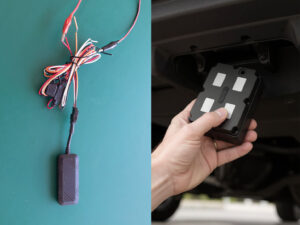
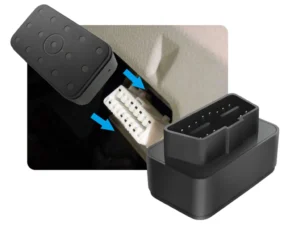
Mixed Deployment Blueprint:
• Core Fleet Vehicles (Long-Term Fixed) → Hardwired: Saves on charging and maintenance labor.
• Trailers, Containers, Equipment → Magnetic: Ideal for flexible asset rotation.
• Employee Vehicles / Light Fleets → OBD-II: True plug-and-play simplicity.
To read a more thorough comparison of installation methods, please refer to our Magnetic vs. Hardwired GPS Trackers Complete Comparison article.
Wholesale Sourcing — What to Verify Before Placing a Bulk Order
Bulk procurement requires evaluating entirely different dimensions compared to purchasing a few test samples.
Supplier Qualification Checklist
| Verification Item | Method | Red Flags to Watch For |
|---|---|---|
| Years in Business | Check official website and business registration details. | \< 5 years indicates a potential lack of large-scale delivery experience. |
| R&D Capabilities | Confirm whether firmware and tracking platforms are developed in-house. | Outsourced firmware = highly limited customization capabilities. |
| Certifications | Request original FCC, CE, and RoHS certificates. | “Only copies available” or “currently applying”. |
| Capacity & Lead Time | Request monthly production capacity and current schedules. | Monthly capacity \< 5,000 units may struggle to satisfy bulk orders. For large-scale demands, please consult GreatWill’s capacity planning. |
| Support Infrastructure | Confirm technical support SLA and response times. | No 24/7 support or communication limited exclusively to email. |
Sample Testing Process
1.Real-World Battery Test: Test across at least one full charge cycle in a live deployment environment matching your target reporting frequency.
2.Magnetic Strength Test: Perform attachment tests on target mounting areas, including high-speed highways and bumpy terrain.
3.Platform Experience: Evaluate the tracking platform’s functionality comprehensively—real-time tracking, playback history, alert setup, and API integration.
4.Network Validation: Verify cellular signal coverage and connection stability in your intended operational region.
5.Environmental Stress: If your deployment region suffers from extreme temperatures or humidity, run localized environment stress tests.
Pricing Structure and Hidden Costs
Device Unit Price: Usually scales down with volume; confirm the tiered pricing structure.
SIM Cards & Data Plans: Is it included? Is it locked to a specific carrier?
Platform Subscription Fees: Billed per device, per account, or per feature? Is there an annual fee?
Accessory Costs: Are magnetic enclosures, charging docks, or mounting brackets billed separately?
Customization Fees: Prototyping fees, tooling/molding costs, and MOQs for OEM/ODM.
Logistics & Duties: Freight methods for bulk shipments and destination country customs tariffs.
Common Trap: A very low hardware unit price paired with high annual platform fees. The 3-year TCO may end up far higher than a solution with slightly more expensive hardware but a free platform. We will illustrate this with concrete figures in the next section.

OEM and ODM Customization for Distributors and Brand Owners
If your business model involves reselling as a distributor, system integrator, or brand owner rather than end-use, OEM/ODM capabilities are the deciding factor in supplier selection.
OEM vs. ODM — What’s the Difference?
| Parameter | OEM | ODM |
|---|---|---|
| Definition | Manufacturing under your brand name (White-label). | Full customization from initial design to final production. |
| Flexibility | Moderate (Brand + packaging + minor configurations). | High (Full hardware, firmware, and platform customization). |
| MOQ | Relatively low. | High. |
| Development Cycle | 2–4 weeks. | 4–12 weeks. |
| Best Suited For | Distributors, regional agents. | Brand owners, large-scale system integrators. For strategic cooperation, you can [learn more about GreatWill’s global services.](https://greatwilliot.com/vehicle-intelligent-one-stop-customization-service/) |
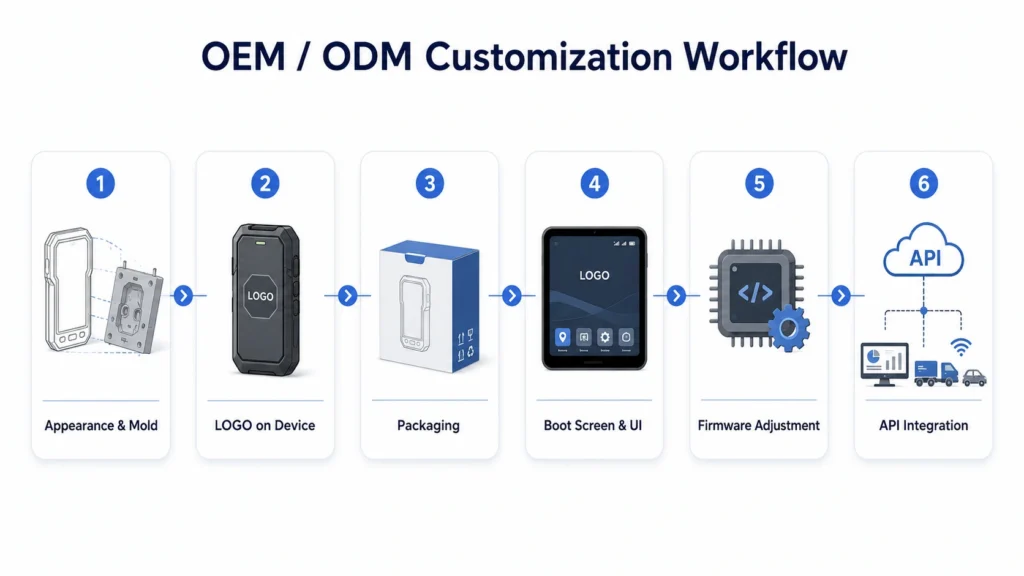
Customization Scope
Hardware Level: Enclosure color and design structure, magnet specifications (selectable pull force tiers), battery capacity tweaks (balancing size vs. runtime), antenna layout, and LED behavior (disabling indicators for stealth).
Firmware Level: Reporting intervals and power-saving logic, communication protocols (to integrate with your proprietary software), custom alert triggers, along with data formatting and encoding layouts.
Branding Level: Silkscreen or laser-engraved logos, custom labels and serial number formats, retail box and manual artwork design, plus bundled accessory kits.
Platform Level: White-label tracking software (your logo, your domain), API connectivity to your legacy infrastructure, data forwarding directly to your servers, alongside custom dashboards and reports.
Cooperation Process
Requirement Gathering: Share your target market, deployment use cases, and technical specifications.
Solution Validation: The engineering team proposes specific hardware and firmware configurations.
Prototype Development: Samples are manufactured according to the customized blueprint for evaluation.
Testing & Acceptance: You test the samples, and we iterate based on your feedback.
Mass Production: Flexible MOQs are established based on the model complexity and customization depth.
Delivery & Support: Continuous technical support, firmware updates, and warranty management.
Pro Tip: Test prototypes extensively during the evaluation phase; do not rush into mass production. Iteration costs are lowest during the sampling phase—once mass production begins, any change impacts inventory and assembly lines.
To explore GreatWill’s complete OEM customization capabilities for magnetic GPS trackers, please visit our dedicated product page. (Note: Specific data points to be provided by the sales team).
Total Cost of Ownership — A 3-Year Projection
4G and CAT-M1 Are Replacing 2G
The 2G phase-out is no longer a future prediction—it is currently happening. Buying new 2G magnetic GPS trackers in 2026 guarantees a forced hardware replacement cycle during its active deployment lifecycle. 4G and CAT-M1 stand as the only logical choices for new deployments.
Battery Technology Continues to Improve
The runtime of next-generation magnetic GPS trackers has jumped from the legacy 30-day window into the 90–140 day tier. The low-power features of CAT-M1 networks further extend this performance. If your last procurement cycle was over 2 years ago, it is time to reassess your battery specifications.
AI-Assisted Fleet Analytics
Tracking platforms are evolving from simply showing a location on a map to delivering actionable recommendations. AI-driven features like driver anomaly detection, route optimization, and predictive maintenance are fast becoming baseline standards. When choosing a vendor, look at their platform’s AI analytics capabilities rather than just raw maps and basic pings.
White-Label Platform Demand Is Growing
Distributors and system integrators are increasingly demanding white-label tracking software—your end customers do not want to see your hardware supplier’s branding. If your business revolves around an OEM model, ensure your vendor provides a true turnkey white-label infrastructure.
Frequently Asked Questions
What is the standard MOQ for wholesale orders?
Standard models with no branding customization typically require 50–100 units. Custom OEM/ODM orders generally range from 200–500 units depending on the complexity of the requirements.
A supplier claims a 140-day battery life; what should I expect in real-world use?
A 140-day timeline is almost always based on an ultra-power-saving mode updating once per day. For active real-time tracking (30-second reporting intervals), actual battery life typically falls between 7 and 20 days.
How do I choose between 4G and CAT-M1?
If you need continuous, high-frequency real-time updates for active fleet management, choose 4G LTE. For lower-frequency asset tracking (trailers, ocean containers), choose CAT-M1. If you are uncertain, pick a dual-mode hardware model that supports both 4G and CAT-M1.
How long does a white-label platform setup and API integration take?
Deploying a white-label tracking platform typically takes 1–2 weeks, while full API backend integration generally runs between 2 and 6 weeks.
Can I purchase sample units before committing to a wholesale order?
Absolutely. Testing samples first to validate performance before committing capital to a large bulk order is the industry standard workflow. Prototyping or sample costs are typically credited back to your account upon placing the bulk production order.
For sample policies, please refer to GreatWill’s order guidelines.




Responses
Discussion
0 responses
No responses yet
Start the discussion with a practical question or field note related to this article.