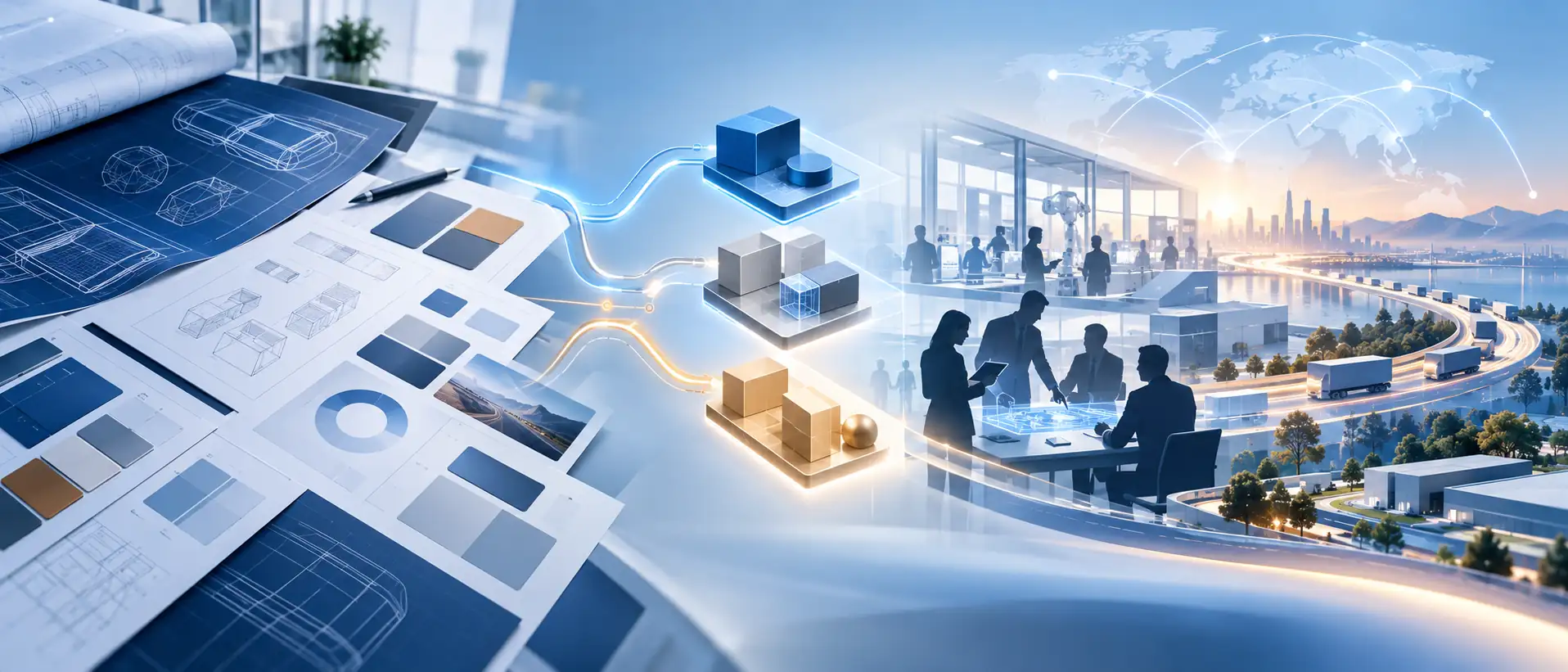
OEM/ODM customization of 4G dash cams is a realistic option worth considering for fleet operators and brand owners of a certain scale. Upfront investment buys you long-term differentiation and cost advantages—the larger your volume and the more specialized your needs, the higher the ROI of customization. On the other hand, if your volume is small and your needs are not special, forcing a custom project is simply wasting money.
What is the biggest fear with customization? Spending money and time only to end up with a product that is hard to use, unstable, and ships late. How do you avoid that? The key lies in accurate requirements assessment, choosing the right manufacturer, and strict process management.
- Not every requirement is worth customizing—first judge whether your need truly demands customization. Don’t customize for customization’s sake.
- OEM and ODM are very different: OEM is ‘a proven solution plus your brand’—low risk and short lead time. ODM means building everything from scratch to your requirements—high investment, long lead time, and high risk.
- Custom projects fail often enough to matter. The most common causes—unclear requirements, poor communication, and picking the wrong factory—are all avoidable in advance.
- The cost of customization is not just R&D and tooling fees—there are also time costs, opportunity costs, and risk costs, all of which must be counted.
- Partnering with an experienced original manufacturer greatly increases your chance of success—the pitfalls they have already hit are your shortcuts.
When Does Your Business Need a Custom Dash Cam Solution
Do you actually need customization? Many people demand it right away, but in fact a standard product would meet their needs. Customization is not the goal—meeting your needs is.
Signs That Off-the-Shelf Products Won’t Cut It
When should you consider customization? A few typical situations:
Special functional needs: the standard product lacks the feature you need, or the feature doesn’t fit. For example, you need to integrate with a specific third-party system, require a special sensor interface, or need specific alarm logic.
Special appearance requirements: the standard look doesn’t match your brand image, or the installation method has special requirements. For example, you need a specific mounting bracket, a specific color, or a specific shape.
Brand-building needs: you want your own brand, with your own brand identity applied across product, packaging, app, and platform. This matters a lot for companies that already have distribution resources.
Differentiated competition: your competitors all use similar products, and you want to build a competitive edge through differentiated features or design.
If you simply want a lower price or to change the boot screen, just talk to the original manufacturer GreatWill about OEM—no deep customization needed.
The Cost of Customization vs. the Value of Differentiation
You have to weigh ‘customization cost’ against ‘differentiation value.
What are the costs of customization?
Direct costs: R&D fees, tooling fees, testing fees, certification fees.
Time cost: a custom project typically takes 3–6 months, or even longer.
Opportunity cost: during the customization period you cannot quickly roll out a proven product to capture the market—the lost opportunity is also a cost.
Risk cost: custom projects carry a risk of failure. You end up with something unusable—hard to use or unstable—after spending both money and time.
Maintenance cost: firmware upgrades and bug fixes for a custom product require ongoing investment. Unlike standard products, where the manufacturer keeps iterating.
What is the value of customization?
Perfect functional fit: the product is built exactly to your needs, so it is the most intuitive to use and the most efficient.
Independent brand: you own your own brand and product, not dependent on someone else’s, giving customers higher brand recognition.
Differentiated competition: you have features others lack and looks others lack, so price wars no longer concern you.
Lower long-term cost: once volume grows, the per-unit cost of a custom product can be lower than buying standard products.
How do you judge if it’s worth it? There is no one-size-fits-all answer—it depends on your situation. But here is a simple test: if you can state in one sentence why a standard product won’t do and customization is mandatory, and that reason ties to your core competitiveness, then customization is probably worth it. If all you can say is that you want your own brand and to look different, you may not yet be at the point where customization is unavoidable.
Start Small: Pilot Before You Commit to Full Customization
GreatWill’s advice to customers is always: start small then scale up, start shallow then go deep.
What does that mean? Don’t jump straight into full-feature customization. Start with a standard product, use it for a while, and figure out what you truly need, which features are must-haves, and which are nice-to-haves. Then customize based on your actual needs.
Why do it this way?
Many needs are imagined: before using it you think you must have a feature, but once you actually use it you realize it wasn’t that important. Validating needs with a standard product first avoids wasting money.
Build trust first: start with a small batch to understand the manufacturer’s capability and service. Once you’re confident they’re reliable, then invest in customization. Otherwise, paying hundreds of thousands in R&D upfront—what if the manufacturer turns out to be unreliable?
Deepen gradually: start with OEM branding (change appearance and brand), then light customization (change a few features), and finally deep customization (full-solution customization). Step by step, the risk is much lower.
Many of GreatWill’s customers have taken this path—first buying a few hundred standard units to try, finding them useful, then doing OEM branding, and adding feature customization once volume picks up. This is the most stable and the most cost-effective approach.
OEM vs. ODM: Understanding the Difference and Choosing Wisely
OEM and ODM are the two most frequently mentioned terms in customization, and also the most easily confused. Many people talk about them at length without actually understanding the difference.
What Is OEM (Original Equipment Manufacturer)
OEM, simply put, is ‘private-label manufacturing.’ The manufacturer has a proven solution and product, and you put your own brand on it to sell.
Characteristics of OEM:
Core solution unchanged: the hardware design, software features, and platform architecture are all ready-made from the manufacturer. You don’t need to develop anything new.
Brand and appearance customization: you can change the logo, packaging, boot screen, app interface, and the platform’s brand presentation—making the product look like yours.
Light functional adjustments: some non-critical features can be adjusted to your needs, such as default settings, interface layout, and alarm thresholds.
Short lead time: usually done in 1–2 months, or even just a few weeks at best.
Low cost: little R&D investment, mainly tooling fees (if the housing is changed) and brand-customization fees. MOQ is relatively low.
Who is OEM suitable for?
Companies with their own brand and sales channels who want to build products under their own brand.
Those with no special requirements for core functions, mainly seeking differentiation in brand and appearance.
Those who want to launch products quickly and don’t want to spend much time on R&D.
GreatWill has a mature OEM partnership system. Private-label 4G LTE in-vehicle recorder dashcams are among the most common projects our customers do—from housing silk-screening and packaging design to app and platform brand customization, we handle it all in one stop. Many customers start with OEM, grow their volume, and eventually become deep partners.
What Is ODM (Original Design Manufacturer)
ODM, or ‘Original Design Manufacturing,’ means the manufacturer designs and builds the product from scratch based on your requirements. From hardware to software, everything is made to your specifications.
Characteristics of ODM:
Fully customized: the product is designed inside and out to your needs. Functions, appearance, interfaces, and platform can all be customized.
Long lead time: from requirements assessment to mass production, typically 3–6 months or longer. Complex projects may take over a year.
Long lead time: from requirements assessment to mass production, typically 3–6 months or longer. Complex projects may take over a year.
High investment: R&D, tooling, testing, and certification fees add up to a significant sum. Upfront investment is large.
High MOQ: because upfront investment is large, manufacturers generally require a higher MOQ to spread the cost.
High risk: a newly designed product may have various unforeseen problems. Multiple iterations are needed to stabilize it.
Maximum differentiation: the product is entirely yours and unavailable to others. This is ODM’s greatest value.
Who is ODM suitable for?
Those with clear differentiation needs that neither standard products nor OEM can satisfy.
Those with sufficient order volume to amortize the high upfront investment.
Those with their own product roadmap and technical team who can collaborate deeply with the manufacturer.
Those with patience who are willing to spend time refining the product and are not in a rush to launch.
ODM is not off the table, but you must be cautious. Many people underestimate ODM’s difficulty and cost, and overestimate their own needs—ending up spending a lot only to produce something less usable than a proven solution.
How to Decide Which Model Is Right for You
OEM or ODM? How to choose? Here is a simple decision framework:
Step 1: List all your requirements and divide them into three categories: ‘must-have,’ ‘should-have,’ and ‘nice-to-have.’
Step 2: Check whether a standard product can meet your ‘must-have’ requirements. If yes, just buy the standard product.
Step 3: If the standard product can’t, see whether OEM plus light customization can. If yes, choose OEM—it saves money, saves time, and carries lower risk.
Step 4: If OEM can’t either, and your ‘must-have’ requirements are truly core essentials rather than nice-to-haves, then consider ODM.
Step 5: Confirm your order volume can support ODM’s investment. If volume is insufficient, the per-unit cost will be very high and not worthwhile.
There is also a middle-ground option: semi-customization based on a mature platform. Keep the core hardware platform and software system proven, and only change the parts you need customized—such as the housing, a certain interface, or a specific functional module. This gives you customization without starting from scratch, with much lower risk and cost than full ODM.
GreatWill generally recommends customers follow a progressive path of ‘standard product → OEM → semi-customization → full ODM’—deepening collaboration step by step as the business grows and needs evolve. This wastes no money and keeps pace with business development.
The Customization Process: From Concept to Mass Production
Once you decide to customize, the next step is the customization process. Many people think customization is just ‘state requirements → manufacturer builds → delivery,’ but in reality there are several stages in between, and none can be taken lightly.
Phase 1: Requirements Assessment and Solution Design
What does this stage involve?
Requirements gathering: list all your ideas and requirements in as much detail as possible. Functions, appearance, performance, cost targets, and timelines must all be spelled out.
Feasibility assessment: the manufacturer evaluates whether your requirements can be met, how difficult they are technically, roughly what they cost, and roughly how long they take.
Solution design: based on your requirements, the manufacturer proposes an initial plan—what approach to use, how to implement it, and the approximate cost and lead time.
Requirements confirmation: both sides communicate repeatedly to clarify the requirements. Finally, a written Software/System Requirements Specification (SRS) is produced and signed off.
For GreatWill’s 4G dash cam customization projects, the first stage is always about thoroughly discussing requirements. We work with the customer to sort out the requirements list, confirm each item, and finally produce a written requirements document. For both sides, this is a form of protection.
Phase 2: Prototyping and Functional Validation (EVT/DVT/PVT)
Prototyping and functional validation. After requirements are confirmed, the manufacturer starts building prototypes.
The prototype stage is usually divided into several rounds:
EVT (Engineering Validation Test): the first prototype, mainly to verify whether functions can be implemented. The appearance may still be rough and some functions may be incomplete. The focus is on whether the core functions work.
DVT (Design Validation Test): the second prototype, with functions basically complete and appearance close to the final product. This round requires comprehensive testing—functional, performance, reliability, and environmental tests.
PVT (Production Validation Test): a version close to mass production, built with formal tooling and production lines. The focus is on validating the manufacturing process to ensure mass production is feasible with high yield.
Each prototype round requires detailed testing, finding problems, fixing them, and then moving to the next round. Generally 2–3 iterations are needed to reach mass-production quality.
What should the customer do at this stage?
Test promptly: test the prototype as soon as it arrives; don’t let it sit. Report problems as soon as you find them—the earlier the feedback, the lower the fix cost.
Record in detail: document problems found in testing thoroughly, ideally with screenshots, videos, and reproduction steps. The clearer the description, the easier it is for the manufacturer to fix.
Prioritize: classify issues into three types—’must fix,’ ‘should fix,’ and ‘can skip.’ Don’t try to fix everything; changing too much can hurt stability and schedule.
Phase 3: Certification and Mass Production
Certification and mass production. After the prototype passes validation, the project enters the certification and mass-production preparation stage
The work at this stage:
Product certification: if certifications such as CE, FCC, and RoHS are required, arrange them at this stage. Certification generally takes 4–8 weeks, depending on the specific type.
Tooling: if new molds are opened, this stage completes mold making and trial molding. Molds generally need 2–3 rounds of adjustment to reach the ideal state.
Production line preparation: the manufacturer prepares materials, creates work instructions, trains line workers, and runs a small-batch trial production.
Small-batch trial production: first build dozens to hundreds of units to validate the manufacturing process and quality stability. Only after the trial passes can full-scale production begin.
Mass production: once everything is ready, formal mass production begins. Quality monitoring must continue throughout.
From prototype to mass production, there is still a lot of work in between. Many customers assume that once the prototype is done, mass production follows immediately, but in reality it takes another one or two months or even longer. Plan this time in advance.
GreatWill has a complete mass-production ramp-up process—from prototype to trial production to mass production, each step has clear standards and checkpoints. After so many years of customization, we know well that ‘a good prototype doesn’t mean good mass production’—mass-production stability is a different level of craft.
What Can You Customize: Hardware, Software, and Branding Options
Many people have a big imagination about customization, but they may not be clear on what can actually be customized, what cannot, and at what cost.
Hardware Customization Options
On the hardware side, there is a lot that can be customized:
Appearance and structure: housing shape, color, material, logo process, and mounting method. This is the most common OEM customization item.
Camera configuration: number of camera channels, megapixels, lens type, and field of view. For example, if you need an especially wide angle or particularly good night vision, it can be customized.
Main chip and storage: which main control chip, how much memory, and how much storage. Choose based on performance needs and cost targets.
4G module: which carrier’s module and what model. Different regions and network requirements call for different modules.
Interfaces and expansion: whether there are extra interfaces such as USB, RS232, IO ports, and sensor interfaces.
Special function modules: GPS, BeiDou, WiFi, Bluetooth, tire-pressure monitoring, temperature sensors—these modules can be added or removed as needed.
Power design: wide-voltage input, low-power standby, and power-loss protection—customized according to the vehicle environment and usage scenario.
The benefit of hardware customization is a precise match to your needs, but the cost is also high—changing hardware involves PCB redesign, retesting, and recertification, with long lead times and high expense.
Software and Platform Customization
Software customization is more flexible and is also where most customization needs lie:
Firmware functions: the device-side functional logic, such as alarm trigger conditions, video parameters, upload strategies, and sleep modes. These are relatively easy to change.
App customization: the mobile app’s interface, functions, and brand presentation. App customization can be shallow or deep—shallow means only changing the logo and colors, deep means changing the entire interface and functions.
Platform customization: the management platform’s functional modules, report formats, and permission system. Enterprise customers often need customized platform features.
Protocols and integration: connecting with third-party systems such as fleet management systems, ERP, and dispatch platforms, via API or private protocols.
AI algorithm customization: specific AI detection features, such as particular behavior recognition or specific alarm rules. This requires an algorithm team.
Voice and prompts: the device’s voice prompt content, language, and volume. Multilingual version customization also falls into this category.
The benefits of software customization are flexibility, speed, and relative cheapness—it’s a matter of changing a few lines of code, far easier than rebuilding hardware. But software customization has pitfalls too—change too much and the future upgrade and maintenance cost becomes very high. It’s best to do moderate customization on top of the original mature architecture, rather than starting over.
GreatWill’s ODM in-vehicle 4G device wholesale solution has strong software customization capability—from device firmware to mobile app to management platform, all are developed in-house, so we can change whatever is needed and respond quickly to customization requests.
Branding and Packaging Customization
Brand and packaging customization is the most basic and also the most common customization item:
Product logo: silk-screen printing, laser engraving, in-mold labeling—different processes give different effects and costs.
Packaging design: color boxes, manuals, accessory packaging. You can use your own design entirely, or have the manufacturer design it for you.
Boot screen and UI: the device’s boot screen and menu interface can be changed to your brand style.
App splash screen and theme: the mobile app’s launch screen, main color scheme, and brand presentation. This is very important for brand image.
Platform white-labeling: the management platform’s domain, logo, theme, and copyright information. It looks like your own platform.
Platform white-labeling: the management platform’s domain, logo, theme, and copyright information. It looks like your own platform.
Although brand customization is not technically demanding, it is very important for brand-building customers—the product carries your brand inside and out, greatly strengthening customer recognition and trust.
GreatWill provides complete brand customization services—from product appearance to packaging to app to platform, offering one-stop hardware and software services.
MOQ, Lead Times, and Cost Structure: What to Expect
The three most frequently asked questions about customization: What is the MOQ? How long until delivery? How much does it cost?
Understanding MOQ Requirements
MOQ (Minimum Order Quantity) is a concern for many customers. The MOQ depends on the depth and type of customization.
Here is a rough reference range (confirm the exact numbers with the manufacturer):
Standard products: often you can start from just a few dozen units, and some manufacturers even sell as few as a few pieces. Suitable for small-batch testing or trial use.
OEM branding (logo and packaging only): typically MOQ 500–1,000 units. Because packaging and silk-screening are involved, too small a volume is not cost-effective.
OEM + tooling (housing change): typically MOQ 2,000–5,000 units. Tooling is not cheap, so too small a volume makes the per-unit amortized cost too high
Software customization (feature changes, integration): there may not be a strict MOQ, but a software development fee is charged. For small volumes, it can be billed as a project.
Full ODM customization: typically MOQ above 5,000 units, and some manufacturers require over 10,000. Upfront investment is large, so insufficient volume is not worthwhile.
MOQ is not fixed and can be negotiated. If your volume is small but you show strong commitment, or have long-term cooperation potential, the manufacturer may lower the MOQ appropriately. But understand this too—custom projects require large upfront investment, so it is reasonable for the manufacturer to require a certain MOQ.
GreatWill’s dash cam MOQ is quite flexible—standard products can be made in small batches, and OEM/ODM MOQ is set according to the project. We value long-term cooperation more.
Typical Lead Times for Custom Projects
The lead time of a custom project is also a concern for many. How long it takes depends on the depth and complexity of the customization.
A rough time reference:
In-stock standard products: 1–2 weeks. If in stock, shipment follows payment.
Standard products in batch (need production): 3–4 weeks. Scheduling + production + testing + shipping.
OEM branding (logo and packaging only): 2–4 weeks. Mainly the time for packaging and silk-screening.
OEM + tooling: 2–3 months. Tooling + trial molding + small-batch trial production + formal mass production.
Light software customization: 2–6 weeks. Depends on the number and complexity of features.
Full ODM customization: 3–6 months or even longer. Requirements assessment + solution design + prototyping + testing + certification + mass production—many stages.
Note that these are ideal-case lead times. In real projects, delays are very common due to requirement changes, failed tests, material shortages, and similar reasons.
Breaking Down Customization Costs
The cost structure of customization is fairly complex—it is not just the unit price of the device. Only by accounting for all costs clearly can you make the right decision.
The cost components of a custom project:
R&D / NRE fee: hardware design and software development fees. Some manufacturers charge it once per project, others amortize it into the unit price. If charged once, it ranges from tens of thousands to hundreds of thousands, depending on complexity.
Tooling fee: if new molds are needed, the mold cost is counted separately. A housing mold costs tens of thousands to over a hundred thousand, depending on complexity.
Certification fee: if new certifications (CE, FCC, etc.) are needed, the certification fee must be included. One certification costs from a few thousand to tens of thousands.
Testing fee: reliability testing, environmental testing, etc. Some manufacturers include it in the R&D fee, others charge separately.
Product unit price: the price per device after mass production. Because custom products have relatively low volume and special configurations, a somewhat higher unit price than standard products is normal.
Ongoing maintenance fee: firmware upgrades, bug fixes, platform maintenance, etc. Some manufacturers include it in the product price, others charge an annual service fee.
How to lower customization cost?
Use proven solutions as much as possible and minimize changes. Don’t change what doesn’t need changing.
Clarify requirements before starting, to reduce mid-course changes. Changes are the most costly in both money and time.
Implement in phases. Do the core features first, then iterate and add more later.
Volume discounts. The larger the order, the better the price the manufacturer can offer.
Customization is not ‘the cheaper the better,’ nor ‘the more expensive the better.’ The key is that the money is well spent—every cent should go where it creates real value.
How to Select the Right OEM/ODM Partner for Your Custom Project
The success of a custom project depends to a great extent on whether you choose the right partner. Choose well and the process is smooth and the result satisfying. Choose poorly and you waste money and time, and still end up with a bad product.
Key Criteria for Evaluating ODM Capability
To evaluate a manufacturer’s ODM capability, look at several aspects:
R&D team: how many people in hardware, software, mechanical, and testing? How many years in vehicle video? The more complete and experienced the team, the stronger the customization capability.
Solution design ability: do they customize on a mature platform, or can they build a full solution from scratch? Full-solution design ability is the most demanding.
Project management: is there a dedicated project manager? Are the processes standardized? Is there a regular reporting mechanism? What custom projects fear most is poor communication and loss of schedule control.
Past cases: what custom projects have they done? Any similar to yours? Having done similar ones greatly raises the success rate.
Testing capability: is there a complete test process and test team? Testing is critical for custom products—poor testing means a pile of problems after mass production.
Mass-production capability: good R&D does not equal good mass production. Is there a mature production system? How well can the custom project be transferred from prototype to mass
Custom projects demand very high all-around capability from the manufacturer—R&D, production, project management, and testing; any weak link is a problem. So a manufacturer that does customization well must have strong overall strength.
Custom projects demand very high all-around capability from the manufacturer—R&D, production, project management, and testing; any weak link is a problem. So a manufacturer that does customization well must have strong overall strength.
From doing so many dash cam customization projects for customers, GreatWill’s biggest lesson is this: customization is not as simple as ‘take the requirement and build it’—it means working with the customer to get the product right and make it good. Our project managers stay in touch with the customer throughout, from requirements to mass production, keeping them clearly informed at every step.
The Importance of Domain Expertise
Industry experience is also very important. The vehicle-video industry has a lot of specific knowledge and pitfalls—those who haven’t done it must stumble through the pitfalls to learn.
Why does industry experience matter?
They know what can and cannot be done: an experienced manufacturer will tell you directly ‘this requirement can’t be met’ or ‘this approach has a problem,’ rather than promising everything and only discovering it’s impossible during production.
They know where the pitfalls are: the vehicle environment is special—temperature, vibration, power, interference, all are pitfalls. Experienced manufacturers avoid them in advance; the inexperienced only learn after stumbling.
They can advise you: a good ODM manufacturer does more than just execute your requirements—it also advises based on industry experience: ‘this feature is unnecessary,’ ‘this design can be optimized,’ ‘this cost can be reduced,’ helping you avoid detours.
They understand compliance and certification: experienced manufacturers know the certification requirements of different markets and the standards of different industries, so you don’t have to research them yourself.
How to judge whether a manufacturer has industry experience? Ask specific questions—what projects they’ve done, what difficulties they met, and how they solved them. The more concrete and genuine the answers, the richer the experience. Those who only say ‘we are very experienced’ may not truly be.
Communication and Project Management Fit
A custom project is a long-term communication process—short ones take two or three months, long ones over half a year. With poor communication, the project surely won’t turn out well.
How to judge whether communication and project management are reliable?
Is there a dedicated contact person? Or does a different person talk to you each day? A dedicated contact is far more efficient.
How fast is the response? When you ask a question, do they reply within half a day or only after two or three days? Slow responses mean low communication efficiency.
Is there regular reporting? Weekly or monthly progress reports? Or do you have to chase them for information? Manufacturers that report proactively are more reliable.
Communication method: only chatting on WeChat, or also formal documents and meeting notes? The more formal the manufacturer, the better their documentation.
English ability: for foreign-trade customers, the language of communication matters. Whether the other side is good at English and can communicate without barriers directly affects project efficiency.
Cooperating on a custom project is, in a way, like finding a business partner—you work with this person/team for a long time, so smooth communication and mutual trust are very important. Sometimes it is wiser to choose a manufacturer you communicate comfortably with than one with the strongest technology but painful communication.
GreatWill’s 4G Linux dash cam customization team is a typical example—from product manager to R&D to testing, a dedicated team interfaces with the customer and syncs progress every week.
Frequently Asked Questions
What exactly is the difference between OEM and ODM? Which should I choose?
Simply put: OEM uses the manufacturer’s proven solution with your brand on it—the core solution stays the same, mainly changing appearance, packaging, logo, and brand presentation; lead time 1–2 months; relatively low MOQ (usually from a few hundred units); low risk and low cost. ODM is a complete redesign and production to your needs—fully customized from hardware to software; lead time 3–6 months or longer; large upfront investment (R&D, tooling, etc.); high MOQ (usually from a few thousand units); but the product is entirely yours with maximum differentiation. How to choose: if your core functions have no special requirements and you mainly want your own brand, OEM is enough. If you have clear differentiation needs that standard solutions can’t meet, and volume is large enough, then consider ODM. We recommend starting with OEM and deepening customization step by step as volume grows.
Roughly how much does a custom 4G dash cam cost? What is the MOQ?
It depends on the depth and quantity of customization. A few tiers: OEM branding (logo and packaging only) costs 5%–15% more per unit than standard products, MOQ usually 500–1,000 units. OEM + tooling (housing change) adds a mold fee of tens of thousands to over a hundred thousand, increases unit price by 10%–20%, MOQ usually 2,000–5,000 units. Light customization (a few software features) depends on complexity; development fees range from tens of thousands to over a hundred thousand, MOQ negotiable. Full ODM customization has upfront investment from hundreds of thousands to over a million, MOQ usually above 5,000 units, and a higher unit price than standard products. These are only rough references; the specifics must be discussed with the manufacturer based on your needs. We recommend clarifying your requirements first, then asking for quotes, so comparison is meaningful.
How long does a custom project usually take? From confirmed requirements to mass production?
It depends on customization depth: OEM branding (logo and packaging only) 2–4 weeks. OEM + tooling 2–3 months. Light software customization 2–6 weeks depending on features. Full ODM 3–6 months, complex projects may take longer. Note that these are ideal-case times; in real projects delays are common due to requirement changes, test issues, material supply, etc. We suggest adding a 20%–30% buffer when planning. Also count certification time—if CE, FCC, or similar certifications are needed, add another 4–8 weeks. We recommend making a detailed schedule with the manufacturer before launch, listing each stage’s milestones, and then following up regularly.
Can the quality of custom products be guaranteed? What if something goes wrong?
Because custom products are newly designed, theoretically the risk is a bit higher than mature products. But as long as the process is standardized and testing is sufficient, quality can be equally guaranteed. The key is several points: First, whether prototype-stage testing is thorough—function, performance, reliability, environmental, all kinds of tests must be done. Second, whether there is a small-batch trial production—to validate the manufacturing process and stability. Third, whether the manufacturer’s quality system is complete—IQC, IPQC, OQC, and aging tests, none can be omitted. Fourth, whether the warranty terms are clearly written—warranty period, failure-rate commitment, how defective units are handled. Suggestion: don’t place too large a first order; validate with a small batch first, then scale up once it’s proven. GreatWill’s custom products carry the same warranty as standard products, and no required test is skipped—customization can change functions, but not lower the quality standard.
What if requirements change during customization? Can features be added mid-way?
In theory yes, but we strongly advise against it. Requirement changes (especially hardware changes) are the main cause of delays and overruns in custom projects. Changing one feature may affect others, requiring redesign and retesting, increasing both time and cost. Our advice: First, clarify requirements as much as possible upfront and write them into the specification document for mutual confirmation. Second, if a change is truly needed, follow a formal change process—the manufacturer assesses its impact on time and cost, and you confirm before it is made. Third, non-core changes can wait for the next version and should not delay the current one’s delivery. Remember: delivering an 80-point product on time is more valuable than an indefinitely delayed 100-point product. Requirements are never finished; learn to prioritize.
Ready to Explore Custom 4G Dash Cam Solutions for Your Business?
GreatWill has its own factories and R&D teams in Huizhou and Shenzhen, with nearly ten years in 4G in-vehicle video equipment and rich OEM/ODM project experience. From standard products to branding to deep customization, we have done every cooperation model. Our strengths: fully in-house hardware and software R&D with strong customization capability; self-produced and self-sold from our own factory, ensuring quality and delivery; standardized project management with smooth communication and transparent progress.
What we can do, we say we can; what we can’t, we say we can’t directly. We prefer to work with customers to clarify requirements, get the solution right, and then steadily build a good product.
If you are considering OEM or ODM customization of 4G dash cams, you can contact our team to discuss the following:
Requirements sorting and feasibility assessment—helping you judge whether to customize and to what extent.
Solution proposal and quotation—providing the most suitable solution and quote based on your needs and budget.
Factory visit and prototype testing—welcome to visit our Huizhou factory in person, and you can also take prototypes of existing products for testing first.
Custom project planning and scheduling—a detailed project plan, clearly stating what each stage does and how long it takes.
As a professional contract manufacturer for custom 4G dash cams, we are confident in helping you succeed with your customization project—delivering not just a product, but satisfaction.
Related Articles
If you are interested in 4G dash cam OEM/ODM customization, the following articles may be helpful to you:
How to Choose a 4G Dash Cam Manufacturer for Your Business
4G Dash Cam Fleet Management: A Complete Solution Guide
The Total Cost of Ownership: 4G Dash Cam TCO Analysis for Fleets