
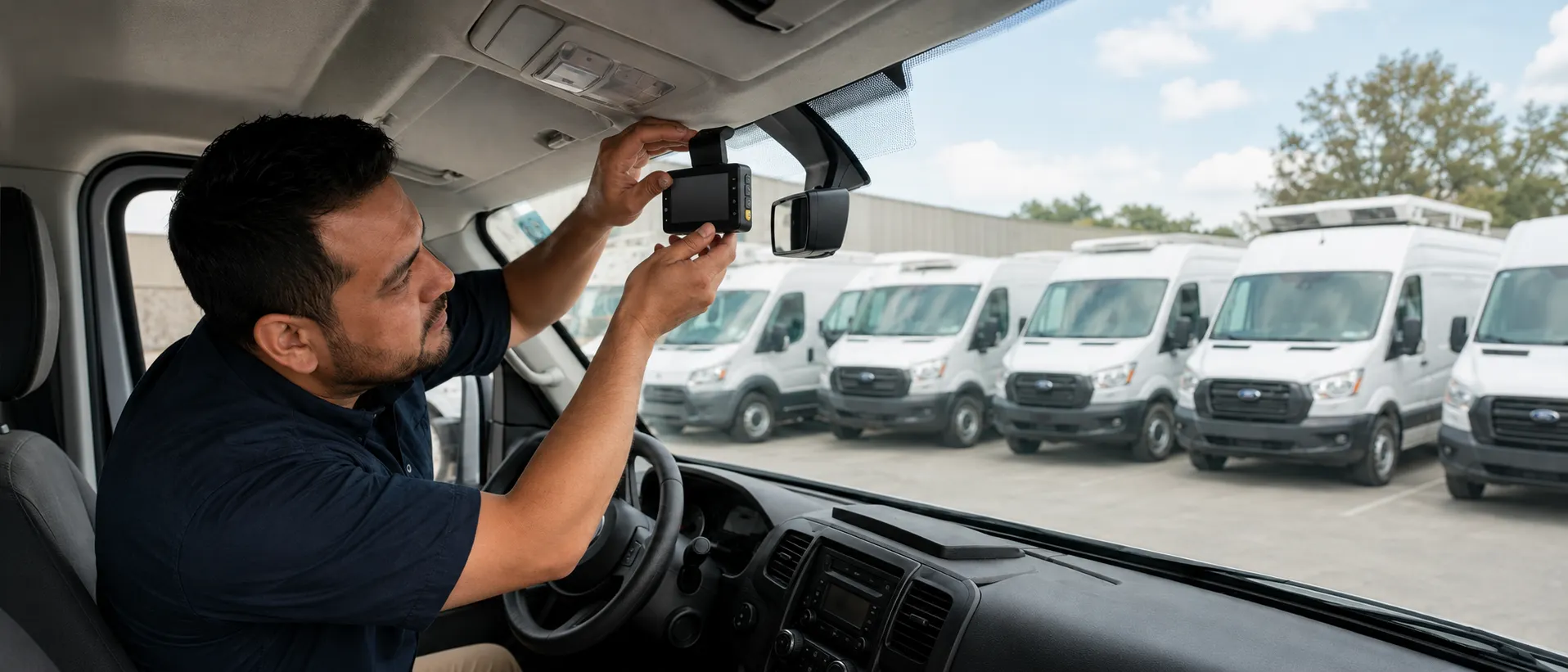
For fleet buyers, the real question is not whether a camera says 2K or 4K. The real question is which setup gives you the best usable evidence per vehicle, per GB, and per month of operation.
Quick answer: for most fleet deployments, 2K is the better default. It usually gives enough detail for incident review, driver monitoring, and route verification without the storage, upload, and heat burden that comes with 4K. Use 4K only when the project has a clear need for the extra pixel budget and the data plan can support it.
What 2K and 4K mean in fleet buying
In dash cam marketing, 2K usually refers to a resolution around 2560 × 1440 (often called 1440p). 4K usually refers to 3840 × 2160 UHD.
That difference matters, but it is easy to overstate it. A 4K frame has roughly 2.25 times as many pixels as a 2K 1440p frame, while 4K has about four times the pixel count of 1080p. So 4K does give more detail, but it also creates materially larger files and heavier system load.
For fleet projects, the label on the box is less important than how the camera behaves in the vehicle.
Why resolution alone does not decide image quality
A higher number is not automatically a better fleet camera. In real deployments, image usefulness depends on the full imaging chain.
- Sensor quality — low-light performance, dynamic range, and noise control.
- Lens quality — sharpness, distortion, and how well the scene is rendered at the edges.
- Bitrate — whether the stream keeps enough data to preserve usable detail.
- Codec — H.264 vs H.265 / HEVC can change file size and network load significantly.
- WDR / HDR tuning — critical for glare, headlights, tunnels, and dawn/dusk driving.
- Thermal stability — important in hot cabins, long routes, and high-duty-cycle vehicles.
In other words, a well-tuned 2K camera can outperform a poorly configured 4K unit in day-to-day fleet use. The best fleet camera is the one that delivers usable evidence consistently, not the one with the biggest resolution number.
The real cost difference between 2K and 4K
For B2B buyers, the cost difference is not just the purchase price. It shows up in operating cost, support burden, and long-term stability.
Storage per hour
Higher resolution usually means larger files unless the bitrate is reduced aggressively. That means shorter retention windows, more frequent card replacement pressure, or a larger storage budget.
Upload bandwidth
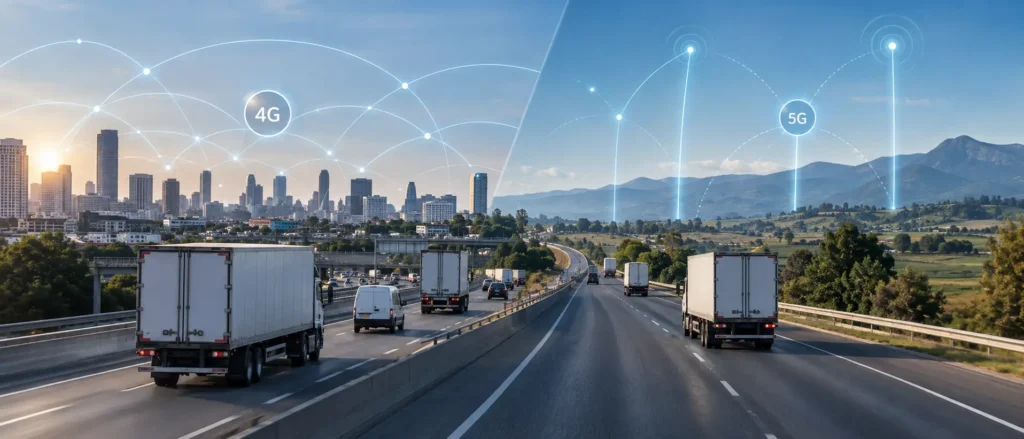
If the camera is connected to a cloud or 4G workflow, 4K can create more upload traffic and higher mobile data usage. That matters for fleets that send event clips, live video, or frequent status uploads.
Heat and processing load
More pixels mean more encoding work. In a vehicle environment, extra processing can translate into more heat and a higher chance of instability if the device is not designed well.
Card wear and maintenance
More data written per hour increases wear on storage media. For fleets, that can become a maintenance issue if cards are replaced too often or if clip retrieval becomes slow.
If you are building a cloud-connected workflow, compare these trade-offs with our cloud dash cam and tracking platform pages, because camera resolution and platform load should be planned together.
Which fleet types usually fit 2K better
For many fleet categories, 2K is the most practical default because it gives enough detail without creating unnecessary operating overhead.
- Logistics fleets — easier to standardize across many vehicles.
- Delivery vans — better balance between evidence quality and retention cost.
- Commercial service vehicles — enough clarity for incident review and driver monitoring.
- Mixed fleets — simpler to roll out when vehicles differ in age, power stability, and duty cycle.
- Wholesale / OEM programs — 2K is often easier to position as the mainstream SKU.
For buyers comparing broader commercial options, our commercial dash cam page shows the types of features that usually matter more than resolution alone.
When 4K is worth the upgrade
4K makes sense when the extra pixel budget solves a specific operational problem, not when it is just a marketing preference.
- You need more zoom margin for post-event review.
- The project is small enough that storage and bandwidth growth will not create a cost issue.
- The buyer expects a premium spec tier and will pay for the extra load.
- You already have a storage and cloud plan that can absorb larger clips.
- The evidence workflow benefits from higher-detail cropping or review.
In practice, 4K is strongest when the project has a clear reason to extract more detail from the image later. If that is not the case, the extra pixels often become extra cost rather than extra value.
What wholesale and OEM buyers should prioritize
For wholesale and OEM projects, the right question is usually not “Which resolution is best?” but “Which resolution will be easiest to deploy, support, and scale?”
- Consistent specifications across the whole order.
- Platform compatibility if the project uses remote monitoring or cloud review.
- Stable thermal behavior for long-hour vehicles.
- Clear customization path for branding, firmware, packaging, or app integration.
- Predictable MOQ and lead time so the rollout does not stall.
If you are planning a branded or distributor program, our OEM dash cam solutions page is a better match for customization-led sourcing, while our dash cam wholesale page is the right place to compare B2B product options.
A practical buying framework for fleet teams
When fleet teams compare 2K and 4K, I recommend using the same checklist every time:
- What is the minimum image quality needed for incident review?
- How many hours of footage do we need to retain per vehicle?
- Will the camera upload clips over 4G or a cloud platform?
- How much data can the fleet budget absorb each month?
- Will the device still stay stable in heat, vibration, and long duty cycles?
- Do we need ADAS, DMS, GPS, or remote monitoring more than raw resolution?
This is where many buyers discover that the best choice is not the highest resolution. The best choice is the one that fits the real operating environment.
Choose 2K unless 4K solves a specific problem
Our recommendation: start with 2K unless there is a clear operational reason to choose 4K.
2K is usually easier to deploy, easier to scale, and easier to keep stable over time. For most fleets, it is the better default because it balances evidence quality, storage planning, cloud load, and support simplicity.
Choose 4K when the project truly needs the extra detail and the data budget is already planned around it. In that case, 4K should be a deliberate upgrade, not a default assumption.
If you are building a fleet program or sourcing in volume, explore our dash cam wholesale and OEM dash cam solutions pages for project support.
FAQ
Is 4K always better than 2K for fleet vehicles?
No. Better evidence depends on sensor quality, bitrate, codec, lens performance, and lighting. In many fleets, a well-tuned 2K camera is the better operating choice.
Why do many fleet buyers choose 2K dash cams?
2K usually gives enough detail for incident review while keeping storage, upload traffic, and card wear under control. It is easier to standardize across a fleet.
Can a 2K dash cam still work for fleet evidence and monitoring?
Yes. With the right sensor, bitrate, and low-light tuning, 2K is practical for review, tracking, and general fleet visibility.
When should I choose 4K for a fleet project?
Choose 4K when the extra pixel budget solves a real requirement and your storage and bandwidth plan already covers the larger files.
Can GreatWill help with wholesale or OEM fleet projects?
Yes. We support wholesale, OEM, and fleet-focused dash cam projects, including product planning, customization, and deployment discussions.
Technical references
For basic definitions, see 2K resolution, 4K resolution, and High Efficiency Video Coding (H.265 / HEVC).


Responses
Discussion
0 responses
No responses yet
Start the discussion with a practical question or field note related to this article.