

In logistics transportation, construction equipment rental, and heavy asset management, assets are exposed to harsh outdoor environments such as torrential rain, extreme cold, high humidity, or intense vibrations for extended periods. Selecting GPS tracking equipment featuring industrial-grade protection and high-reliability passive deployment is the core of securing assets and achieving digitalized management.
Industrial-Grade Protection Standards: A deep dive into how housing materials and sealing techniques withstand extreme outdoor conditions.
Secure and Reliable Magnetic Structure: Evaluating the adhesion stability of ultra-strong neodymium magnets in continuous vibration and bumpy environments.
Long-Term Maintenance-Free Deployment: Combining high-capacity batteries with low-power networks to significantly reduce long-term fleet operational and maintenance costs.
All-Around Anti-Theft and Recovery: Constructing the final line of defense for high-value outdoor assets through multi-tiered alert mechanisms.
Technical Feasibility: Are Magnetic GPS Trackers Suitable for Outdoor Environments?
The operating conditions for outdoor asset tracking are extremely complex, GPS devices must withstand prolonged weathering and endure high-frequency vibrations and road debris impacts during transit. Hardware solutions with compliant technical specifications are fully capable of handling these high-intensity operational scenarios.
The core of choosing heavy-duty magnetic GPS tracking equipment for outdoor or rugged environments lies in the physical defense performance of the enclosure. Engineering vehicles and open-air assets frequently face flying gravel and mechanical impacts, requiring GPS tracking device housings to use waterproof and dustproof industrial-grade engineering plastics (such as PC+ABS alloys). This material maintains structural toughness even under extremely low or high temperatures, preventing moisture infiltration caused by housing cracks.
Beyond the material itself, the sturdiness of the mounting method directly determines asset security on bumpy road sections. Industrial-grade hardware typically integrates customized sets of powerful neodymium magnets paired with specialized anti-vibration, non-slip rubber bases to generate tens of kilograms of vertical pull force. This structural design ensures that the tracker adheres tightly to container chassis or heavy machinery steel frames and effectively cushions high-frequency vibrations from the road, preventing the GPS equipment from detaching during high-speed travel or severe jolts.
For system-wide planning of wireless deployment and large-scale fleet application considerations, you can refer to Magnetic GPS Tracker Battery Life: Sizing Deployment for Fleet Scaleto obtain a more complete overall solution design.
Sealing and Reliability: How Do Waterproof GPS Trackers Work?
The core value of a waterproof GPS tracker lies in its long-term ability to counter dynamic water pressure and humid air. Through rigorous structural design and material processing, the sensitive electronic components inside the GPS device remain protected in a completely isolated state.
When procuring magnetic GPS trackers, a quantitative evaluation of protection ratings is critical.
| Protection Rating | Testing Standards and Technical Performance | Target B2B Core Scenario Judgment |
|---|---|---|
| IP65 | Completely prevents dust ingress; withstands low-pressure water jets from any direction (with no harmful effects). | Suitable for conventional sheltered outdoor environments, internal deployment within enclosures, or non-exposed assets that only need to resist daily splashing and light rain. |
| IP66 | Completely prevents dust ingress; withstands powerful high-pressure water jets from any direction (heavy seas or powerful nozzles). | Suitable for completely open-air conventional transport trailers and construction site machinery, effectively resisting torrential rain washdowns or routine vehicle washing. |
| IP67 | Completely prevents dust ingress; withstands immersion in water up to 1 meter deep at room temperature for 30 minutes. | Suitable for environments frequently facing accumulated water, occasional short-term water wading, or snow coverage, such as conventional logistics trailer chassis and the exterior of container chassis. |
| IP68 | Completely prevents dust ingress; meets more stringent continuous deep-water immersion tests specified by the manufacturer, offering higher resistance to dynamic water pressure. | Suitable for open-pit mining equipment, port and terminal assets under year-round high humidity, and heavy machinery operating in extremely harsh, muddy environments over long periods. |
To learn more about the advantages, disadvantages, and lifespan comparisons between passive magnetic and wired hardware across various fleet deployment environments, it is recommended to read:Magnetic vs Hardwired GPS Trackers: Which Is Better for Your Fleet Deployment?.
Vehicle Security Function: GPS Trackers for Car Anti-Theft and Asset Protection
In open outdoor venues or cross-border logistics transportation, assets face extremely high risks of circulation and losing control. Tracking equipment with high concealment and proactive security defense forms an essential part of building asset risk-resistance capabilities.
Ultra-High Concealment
The passive, magnetic installation-free design endows the GPS device with exceptional concealment, making it an extremely efficient anti-theft tool. Since it does not need to connect to the main power lines of vehicles or machinery, it can be flexibly hidden in highly discreet locations that are very difficult to detect with the naked eye or routine inspections, such as asset chassis, inside main beams, or within container sandwich layers. This passive characteristic cuts off the possibility of thieves tracing wires to find clues, providing covert protection for high-value assets.
Strong Proactive Anti-Theft Awareness
The core of proactive defense lies in intelligent perception and instant response mechanisms. When an asset undergoes abnormal displacement, experiences forced tampering, or the magnetic mount detaches, the built-in light sensor and three-axis accelerometer trigger an alert instantly. The GPS tracker device immediately switches to a high-frequency tracking mode and synchronizes precise geographical coordinates and alert information to the management platform via low-power IoT networks. This allows managers to take action the very moment an asset is illegally moved.
For wholesalers and bulk buyers, understanding the core technical evolution and trends of these GPS tracking devices holds long-term value; details can be accessed at 4G Magnetic GPS Trackers: Why Fleet Operators Are Upgrading from 2G.
Supply Chain Quality: Manufacturing Rigorous Testing Standards
-
Multi-Axis High-Frequency Vibration Testing: Simulates environments where assets endure long-term continuous vibrations on extreme road conditions or construction sites, ensuring internal high-energy lithium batteries, magnetic structures, and antenna solder joints do not loosen or fail under prolonged fatigue stress.
-
High-Low Temperature Cycling Damp Heat Testing: subjects the equipment to drastic temperature alternations and high-humidity cycles within very short intervals, verifying the weatherability of housing materials and the sealing performance of structural seals during thermal expansion and contraction.
-
High-Pressure Rain and Immersion Testing: Conducts multi-angle high-pressure water gun spraying and deep-water immersion on hardware within standardized test chambers, ensuring production-line waterproof specifications strictly comply with industrial standards to guarantee years of stable outdoor operation.
If you are evaluating specific configurations tailored to your business line, seeking larger bulk customization solutions, or need to obtain detailed technical white papers, please visit our main GPS Trackers Catalog Entry or the dedicated Magnetic GPS Tracker Product Page. We will provide comprehensive manufacturing-side support ranging from hardware selection to system integration.
Target Applications: Industrial Scenarios for Outdoor Asset GPS Tracking
In B2B cross-border logistics and asset supply chain management, the application scenarios for waterproof, shockproof, heavy-duty magnetic GPS trackers are clearly defined. Different industries focus on different hardware limits of the equipment based on their respective operational pain points.
Cross-Border Intermodal Container Tracking

Containers are exposed to extreme environments with high salt spray and high humidity year-round during ocean freight, and must withstand extreme weather challenges during inland overland transshipment. Trackers with high protection ratings can adhere to blind spots at the bottom of containers, providing months of cross-border boundary tracking and transit node reporting via low-power IoT networks without damaging the container structure.
Construction Machinery and Heavy Equipment Rental Management
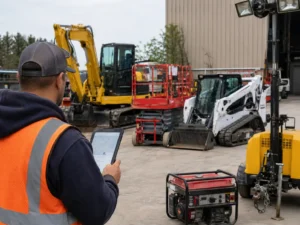
Assets such as excavators, generator sets, and mobile lighting towers are usually parked for long periods on completely unsheltered outdoor construction sites. Because the operating environment for these assets is filled with mud impacts, high-frequency vibrations, and severe mechanical washdowns, conventional tracking equipment is highly susceptible to damage from water ingress or detaching due to jolts. Heavy-duty magnetic industrial-grade trackers can firmly attach to the inner side of machinery steel frames, helping rental companies precisely manage equipment runtime hours and prevent equipment from being driven outside authorized service zones.
If you need to customize magnetic mounting bases and high-durability battery specifications for a specific model of heavy machinery or trailer, please feel free to visit our one-stop custom manufacturing services page at any time.
Key Technical and Procurement Queries for B2B Buyers
Industrial-grade trackers universally utilize high-performance Neodymium Iron Boron (NdFeB) heavy-duty magnets treated with anti-corrosion surface coatings. Within conventional outdoor working temperature ranges (-20°C to 70°C), the natural annual degradation rate of their physical magnetic force is negligible. Significant demagnetization occurs only when encountering ultra-high temperatures exceeding their tolerance limits or severe chemical acid-base corrosion. Therefore, a well-engineered sealed enclosure prior to factory shipment is crucial for protecting magnet performance. If a fleet requires regular use of high-pressure water guns to clean engineering machinery or trailer chassis, it is recommended to explicitly select equipment with a protection rating of IP66 or IP67 and above during procurement. An IP66 rating indicates the hardware can withstand high-pressure heavy seas or strong sprays from powerful nozzles, while internal dual sealing rings or comprehensive potting techniques ensure that moisture cannot penetrate the core circuit board even under high-pressure conditions. Torrential rain, heavy fog, or thick snow accumulation will cause a certain degree of attenuation to GPS/GNSS satellite signals, which is a physical commonality among all satellite positioning hardware. To counter this challenge, industrial-grade hardware is typically configured with high-gain ceramic antennas and employs multi-mode positioning schemes (such as GPS + BeiDou + GLONASS triple positioning alongside cellular base stations). When satellite signals are disrupted by extreme severe weather, the GPS tracker device automatically switches to base station positioning mode to ensure the asset’s location never goes offline. This is a commercial trade-off based on battery life and energy consumption management. Since passive GPS devices cannot draw continuous power from a vehicle’s main battery, frequent second-level tracking keeps the communication module in a high-power awake state for extended durations, causing even high-capacity batteries to deplete within just a few days. In practical applications, outdoor assets (such as containers and trailers) are better suited for a “scheduled tracking interval mode” (e.g., reporting location 1-2 times a day) combined with a “motion-triggered wake-up” mechanism. This satisfies regulatory security oversight requirements while enabling the entire machine to achieve maintenance-free battery lifespans lasting several years.
Will the magnets inside heavy-duty magnetic GPS trackers demagnetize over time or due to harsh environments?
How can we ensure that GPS tracking device will not suffer water ingress damage from high-pressure wash guns when attached to a trailer chassis?
Will the positioning accuracy of wireless heavy-duty magnetic GPS trackers be interfered with by severe outdoor weather?
Why do manufacturers discourage frequent second-by-second real-time tracking in outdoor heavy-duty magnetic GPS equipment?




Responses
Discussion
0 responses
No responses yet
Start the discussion with a practical question or field note related to this article.