
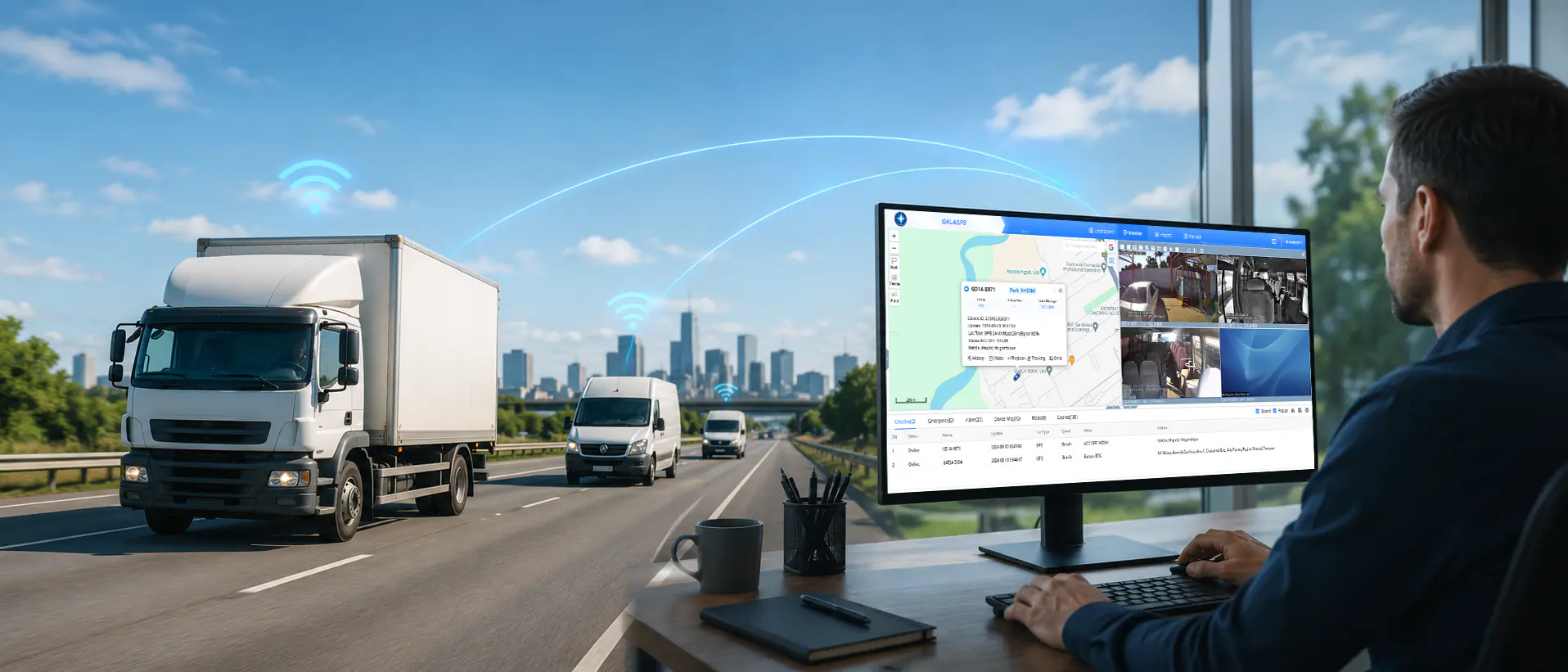
How 4G Live Streaming Dash Cams Transform Real-Time Fleet Monitoring
GreatWill 4G live streaming dash cam is an in-vehicle camera system that uploads onboard video in real time over mobile cellular networks. Unlike traditional dash cams that only store footage locally, live streaming models let fleet managers view a vehicle’s live feed from any location, at any time.
4G live streaming dash cams change this loop completely — the picture is visible the moment events happen. This article walks through how live streaming dash cams work in fleet monitoring: what changes in daily workflows, which capabilities matter when you compare, which operations genuinely pay off, and how to choose a supplier.
What Changes When Fleet Video Goes Live
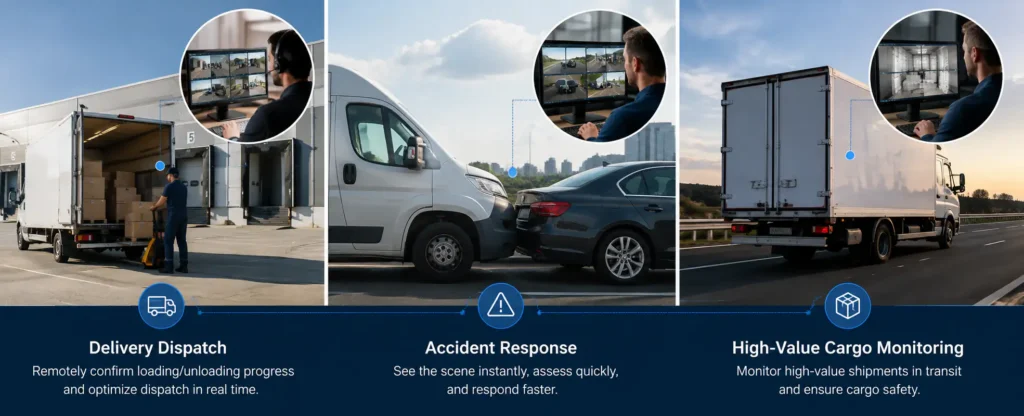
Live streaming moves the monitoring window from “after the fact” to “in the moment,” which directly changes how dispatch, safety, and customer service teams process information every day.
From post-event evidence to real-time intervention. Traditional dash cams deliver value through reconstruction: after an incident, you pull the footage and review what happened. Live streaming dash cams deliver value through intervention: you see, assess, and act while events are still unfolding. Video’s role shifts from “dispute evidence” to “operational information source.”
How dispatch and safety team workflows change. Dispatchers remotely confirm loading and unloading progress, temporary detours, and on-site anomalies, cutting back-and-forth phone calls and driver waiting time. Safety teams intervene before risky behavior escalates, instead of holding talks after the fact. Customer service facing a complaint or traffic dispute sees the scene immediately and handles evidence with confidence.
The impact on cost. Real-time visibility compresses two types of hidden costs: incident handling costs (on-site confirmation, dispute evidence, claims cycles) and operational confirmation costs (dispatch waiting, empty-mile verification). The exact savings depend on fleet size and business model, but the direction is certain: the earlier the information arrives, the earlier the decision gets made.
Real-Time Capabilities That Matter for Fleet Operations
When dash cams go live, the capabilities that matter shift from what the device records to how fast the information reaches you. These six dimensions separate live streaming models from traditional recorders in daily fleet operations.
| Capability | Traditional Dash Cam | 4G Live Streaming Dash Cam |
|---|---|---|
| Video viewing | Pull the card or download at base | Remote viewing anytime from phone or computer |
| Real-time visibility | Post-event playback | Second-level live view |
| Alert push | Local alerts or post-event export | Real-time push to the management platform |
| Incident evidence | Retrieve footage after the event | Clips auto-saved the moment events happen |
| Storage location | Local SD card | Local storage + cloud backup |
| Remote management | Manual per-device handling | Batch viewing and management on one platform |
Latency and image quality. The two are a trade-off to balance: with a strong signal, the feed is essentially real-time; in weak-signal areas, the device automatically lowers the resolution tier to keep the stream continuous. When evaluating, look at the device’s resolution tier strategy and weak-signal degradation mechanism, not just the maximum resolution.
Alerts and event triggers. Live streaming’s value lies in “watching when you should.” When events like collisions, hard braking, or speeding are triggered, the device captures key clips and pushes them in real time, so managers don’t watch full feeds — they only handle events. When comparing, check three things: whether alert types cover your business risks, whether pushes reach the management platform directly, and whether event clips are automatically archived to the cloud.
Multi-account remote access. Fleet management is teamwork — dispatch, safety, and management may need to watch at the same time. Live streaming platforms support multi-account access with role-based permissions: who can watch live, who can view playback, and who can export evidence are all configurable. When purchasing, confirm the platform’s account system matches your organizational structure.
Live Streaming in Action: Scenarios That Pay Off
Not every fleet needs 24/7 live streaming. The payoff from real-time footage is most direct in certain scenarios, and each one calls for a different purchasing focus.
Delivery and dispatch. Delivery fleets face loading and unloading confirmations, last-minute order changes, and handover disputes every day. Live streaming lets dispatchers remotely confirm on-site progress, reducing driver waiting time. Handover disputes get settled on the spot, with cloud clips available for verification afterward. 4G LTE Dash Cam has been optimized for stability and power management in delivery fleets, making it a suitable choice for main fleet vehicles.
Accident and dispute response. When traffic accidents or service disputes occur, live streaming’s value is in the “first moment”: you see the scene as it happens and judge whether rescue or liability assessment is needed, without waiting for the driver to return to base with the card. Key clips are uploaded to the cloud in real time, avoiding the evidence disadvantage of a lost or overwritten memory card.
High-value cargo and sensitive transport. High-value goods, cold chain, and precision equipment shipments need continuous status confirmation on the road. Live footage combined with sensor data such as door sensors and temperature lets managers remotely confirm cargo safety. Cold chain fleets can link temperature alerts with live video to determine whether the issue is equipment failure or an open door.
Managing Data Usage and Streaming Costs
The question live streaming gets asked most often is not about results — it’s about data. Data consumption depends on the streaming strategy and resolution tier.
Always-on streaming vs. event-triggered upload. The two strategies differ significantly in cost: always-on streaming gives a complete picture but consumes more data. Event-triggered upload (capturing clips on collisions, hard braking, or manual marking) uses less data and suits alert- and evidence-focused operations. Most fleets adopt a combination: daily event uploads plus live streaming during key periods.
Resolution tiers and bandwidth control. The tier directly determines data usage: high definition delivers more detail but consumes more data; standard definition suits monitoring scenarios and uses less. Devices support setting tiers by time period or vehicle group — for example, high definition in urban areas during the day and reduced bitrate overnight — so data is spent where it matters.
How to budget. A live streaming solution’s cost is made up of three parts: hardware, data plans, and platform services. Hardware is a one-time investment; data and platform are monthly recurring costs. Exact pricing varies by carrier and region — tell the sales team your vehicle count, daily mileage, and streaming hours, and you can get a budget estimate modeled on your operating pattern. We don’t publish price lists, but we can size a projection to your fleet.
How to Evaluate a Live Streaming Dash Cam Supplier
A live streaming solution is three things: hardware, network, and platform. A supplier’s capability across all three determines whether the solution works long term. This checklist is what to verify before procurement conversations.
Latency and stability: Does the device automatically degrade gracefully to keep the feed continuous under weak networks? Are reconnection and backfill reliable after signal loss? Demand on-site testing — don’t trust marketing specs.
Platform capability: Are live view, playback, alerts, and batch management on one platform? Does it support multi-account, role-based access?
Integration capability: Are APIs/SDKs available to connect with your existing GPS platform or fleet management system? What integration cases exist?
Firmware and upgrades: Is remote firmware update supported? Does feature iteration require returning devices to the factory?
Service guarantee: Are after-sales response time, warranty, and data SIM management included in the solution?
GreatWill’s 4G Dash Cam product line covers everything from entry-level to live streaming models and from single-channel to multi-channel configurations. The live streaming platform supports multi-account permissions and open interfaces, and solutions can be sized to your fleet.
FAQ: Live Streaming Dash Cams for Fleet
What types of fleets are 4G live streaming dash cams best suited for?
If your business involves delivery handovers, accident disputes, high-value cargo, or the need to remotely confirm vehicle status, live streaming dash cams directly compress the time spent on verification and evidence. If your fleet mainly runs short, fixed routes and post-event playback is enough, you can start with event-triggered upload mode for a lower cost.
How much data does live streaming consume?
It depends on the streaming strategy and resolution tier: always-on streaming consumes more, while event-triggered upload mode only sends short clips during events like collisions and hard braking, concentrating data use around those moments. Exact figures relate to the device bitrate and carrier plan — share your vehicle count and operating model with the supplier to get a data usage estimate for your situation.
Does live streaming drop out in areas with poor signal?
Live streaming dash cams automatically lower the resolution tier in weak-signal environments to keep the feed continuous. If cellular signal is completely lost, the device continues recording locally and automatically backfills once the network recovers. When evaluating, focus on weak-signal degradation and breakpoint resume capability.
Where is live streaming video stored?
Live footage is written to both the local SD card and the cloud at the same time. The local card ensures no recording is lost when offline; the cloud ensures managers can view, replay, and retrieve evidence at any time. Cloud capacity and fees can be planned separately and scaled on demand.
How much more do live streaming dash cams cost than regular dash cams?
The cost difference comes from three parts: hardware, data plans, and platform services — the extra is ongoing network and platform spend. The exact gap depends on the streaming strategy and resolution tier. Share your operating model with the sales team to get a budget estimate sized to your fleet.
Can live streaming dash cams integrate with our existing fleet management system?
Most live streaming solutions offer APIs or SDKs that connect video streams, alerts, and location data to your existing GPS platform or fleet management system. Before purchasing, confirm the supplier’s open interfaces and integration cases so systems can be connected after deployment. 4G Dash Cam Fleet Management: A Complete Solution Guide Cloud-Based Dash Cam Storage for Business: Complete Management Guide https://greatwilliot.com/cloud-dash-cam-storage-business-guide/ 5G vs 4G Dash Cams: Should Your Fleet Upgrade Now? https://greatwilliot.com/5g-vs-4g-dash-cams-fleet-upgrade/



Responses
Discussion
0 responses
No responses yet
Start the discussion with a practical question or field note related to this article.