
1. Why Is Full HD 1080P Essential for a Dash Cam?
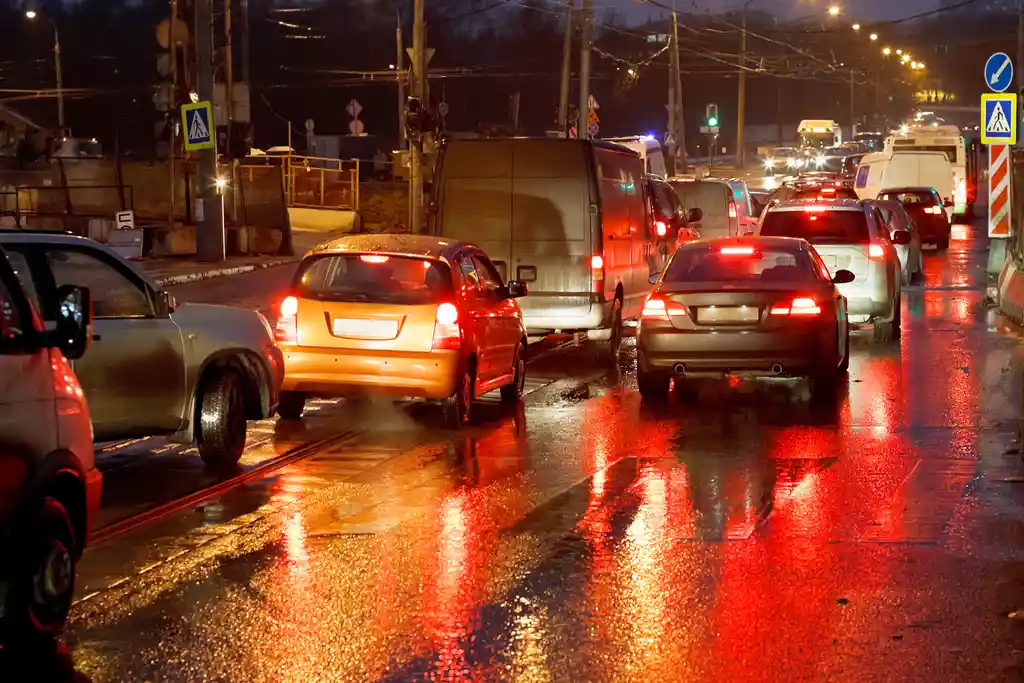
Glare during night driving, blurred vision in rainy or snowy weather, and evidence-gathering difficulties after sudden accidents—these common driving troubles call for a dash cam that delivers sharp recording both day and night. More than just a simple “on-board camera”, a 1080p full hd dash cam is a core device for safeguarding driving safety and protecting the driver’s legitimate rights and interests.
- Full HD 1080P (1920×1080 pixels) paired with 30fps recording frame rate captures precise road details. Whether it is the license plate number of the vehicle ahead, traffic signs on both sides of the road, or the collision moment in an accident, it can present clear and smooth images.
- The combination of 1080P resolution and Wide Dynamic Range (WDR) technology ensures the dash cam maintains stable performance even in scenarios with drastic light changes. For example, when entering or exiting a tunnel during the day, or driving against strong light in the evening, WDR technology automatically adjusts image exposure and white balance, preventing overexposure in bright areas and pure blackness in dark areas, and ensuring consistent clarity throughout the recording process.
- Compared with low-resolution models such as 720P, 1080p full hd dash cam offers stronger noise reduction capability in low-light environments. It avoids grainy images and blurred key information caused by insufficient light.
2. Night Vision Technology Explained: A Key Enabler for Driving Safety
2.1 What Is a Dash Cam with Night Vision Full HD 1080p?
Night vision technology has evolved from basic “fill light” to “intelligent enhancement”, achieving “full-scenario true-color night vision”. Even in an underground parking lot without any external light source, it can record clear images with rich details. If 1080P resolution is the “basic image quality guarantee” for a dash cam, then night vision technology is its “core competitiveness” for coping with complex light environments. Without robust night vision capability, even the highest resolution is useless at night.
The quality of night vision performance first depends on two core hardware components: the image sensor and the lens aperture.
- High-quality models are generally equipped with advanced sensors, whose light-sensitive area is nearly twice that of ordinary 1/3-inch sensors. They capture more light in extremely low-light environments while reducing image noise.
- Coupled with an F1.0 large aperture lens, light intake is further enhanced, making road details and license plate information clearly visible even in the dark.
2.2 Key Support for Driving Safety
- Wide Dynamic Range (WDR/HDR): Night driving often faces challenges such as “glare from oncoming vehicle lights” and “uneven brightness of street lamps”. WDR technology simultaneously records short-exposure and long-exposure images and fuses them in real time, balancing details in bright and dark areas, avoiding image distortion caused by glare, and ensuring clear visibility of details both in the light area of vehicle lamps and in the shadow area.
- ISP Image Signal Processing: With built-in intelligent algorithms, it automatically adjusts white balance, noise reduction parameters, and exposure levels to adapt to different light environments in real time. For example, on dim suburban roads, ISP technology enhances sensor sensitivity; in urban neon-lit environments, it suppresses strong light interference, ensuring true colors and clear details of the image.
- Infrared Auxiliary Lighting (IR): For ride-hailing and taxi drivers who need to record in-car scenarios, the infrared night vision function is particularly important. Infrared LED lights silently illuminate the in-car environment without affecting driving, capturing clear images even in a completely dark car and protecting the rights and interests of both drivers and passengers.
3. Core Application Scenarios of Full HD 1080p Dash Cam with Night Vision
Still in doubt? Let’s take a look at the indispensable role of this type of dash cam in real-world scenarios:
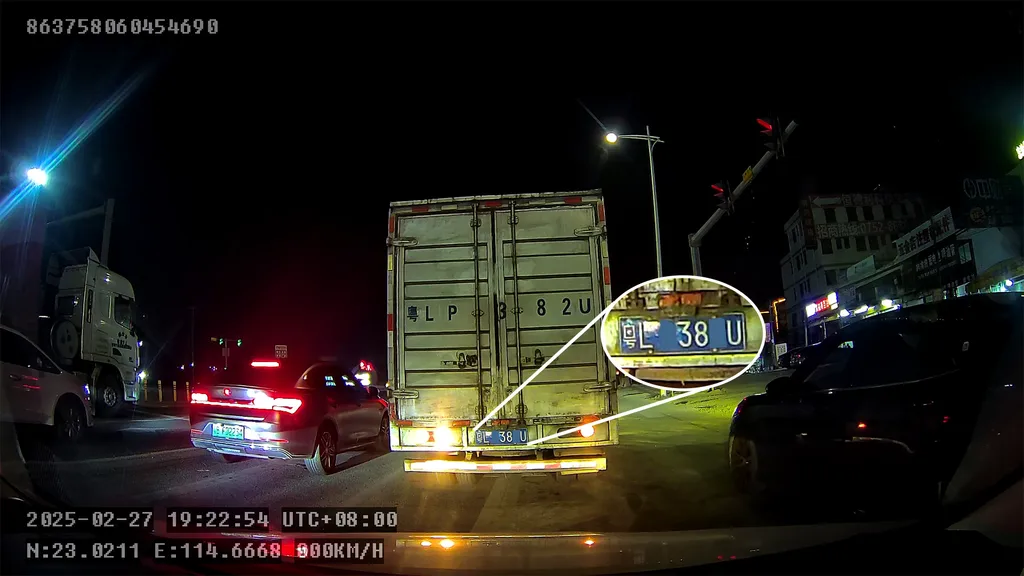
3.1 Regular Night Driving
Whether on urban roads illuminated by street lamps or dim suburban and highway sections, a full hd 1080p dash cam night vision equipped with night vision and WDR functions can accurately capture the dynamics of vehicles ahead, road markings, and potential obstacles. Its ultra-long-distance visibility can detect hidden dangers such as roadside utility poles and pedestrians in advance, reserving sufficient reaction time for the driver.
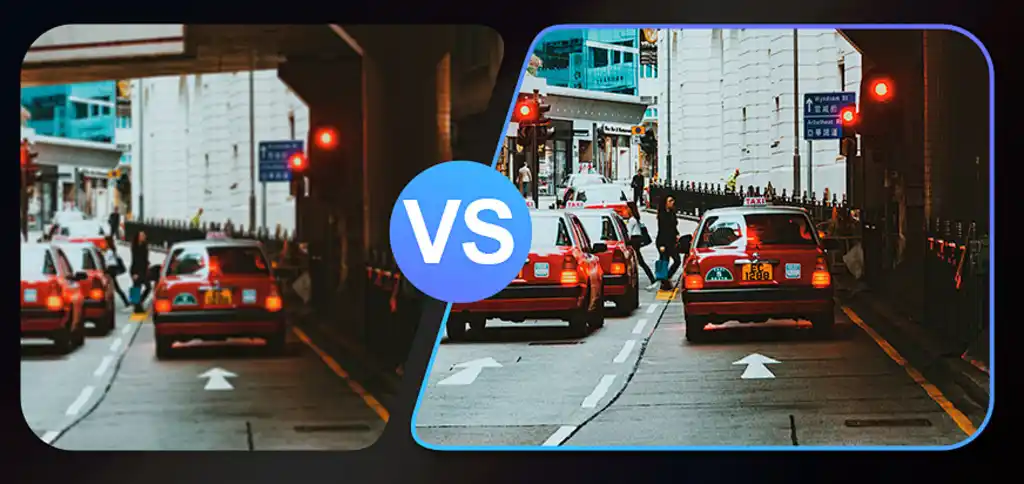
3.2 Driving in Severe Weather
- Rainy Days: HDR + advanced algorithms reduce the impact of rainwater refraction on light, avoiding image blurring, and enabling clear identification of the license plate and road outline ahead even in heavy rain at night.
- Snowy Days: Intelligent noise reduction algorithms eliminate visual “noise” caused by snow reflection, restoring the actual road conditions and preventing detail loss due to snow reflection.
- Foggy Days/Tunnels: The combination of a large aperture and high-sensitivity sensors enhances image penetration in low-visibility environments, recording key driving trajectories.
3.3 24-Hour Parking Monitoring
A 1080p full hd dash cam with night vision and 24-hour parking monitoring function can work in low-power mode even after the vehicle is turned off. When a collision or abnormal movement is detected, it automatically starts recording and locks the video file, effectively preventing vehicle scratches, vandalism, and other incidents, and providing all-day security for parking.
3.4 Special Driving Needs
- Tunnels/Underground Parking Lots: When a vehicle enters or exits a tunnel or underground parking lot, the light suddenly changes from strong to weak (or vice versa). Ordinary dash cams are prone to temporary “white screen” or “black screen”. Thanks to its fast light adaptation capability and WDR technology, the full hd 1080p dash cam night vision instantly balances image brightness, ensuring that driving details at tunnel entrances and inside parking lots are not lost, and avoiding evidence interruption caused by sudden light changes.
- Blind Spot Detection: It monitors the rear and side lanes in real time through a wide-angle lens, automatically alerting when a vehicle approaches the blind spot, and reducing the risk of collision during lane changes.
- Ride-hailing/Taxi Scenarios: The infrared night vision function can clearly record in-car situations, protecting the personal safety of drivers and properly handling disputes between drivers and passengers.
4. Key Considerations for Choosing a Full HD 1080p Dash Cam with Night Vision
(Clarity, Memory, Night Vision, Reverse Image, Stability, Emergency Saving)
To select a truly practical full hd 1080p dash cam night vision, focus on the following 6 core dimensions:
4.1 Clarity: Adhere to the 1080P Bottom Line and Pursue Detailed Performance
In addition to confirming the full HD 1080P resolution, pay attention to frame rate stability (preferably 30fps or above) and lens quality. It is recommended to choose products equipped with glass lenses instead of resin lenses. Glass lenses have better light transmittance and wear resistance, and are less prone to image distortion or blurring after long-term use.
4.2 Memory Support: Meet the Needs of Loop Recording and Long-Term Storage
The dash cam needs to support loop recording function (to avoid running out of storage space), and memory compatibility is crucial. Priority should be given to products that support 64GB-256GB high-speed TF cards (CLASS10 or above) to meet the long-term recording needs of daily commuting. For long-distance driving or 24-hour parking monitoring needs, you can choose high-end models that support 512GB large-capacity memory.
4.3 Night Vision Capability: Dual Compliance of Hardware and Technology
In terms of hardware, it is equipped with high-end sensors and F1.0-F2.0 large aperture lenses. In terms of technology, ensure that the product has WDR/HDR and ISP tuning functions. You can judge by viewing actual recorded samples: the night image should have no obvious noise, the license plate should be clearly identifiable, and the color should be true without color cast.
4.4 Reverse Image: Wide Angle + Real-Time Display Are Indispensable
The rear camera needs to have a wide-angle field of view of more than 120° or be equipped with multi-channel high-definition lenses to fully cover the rear road conditions. At the same time, it supports automatic image switching when reversing, with clear guide lines to help novice drivers easily handle reversing scenarios. It supports multi-angle view switching to further improve reversing safety.
4.5 Stability: Adapt to Extreme Environments and Operate Reliably
The dash cam needs to work in the vehicle environment for a long time, so stability is crucial. Focus on the operating temperature range (it is recommended to choose products with a range of -4°F to 158°F, i.e., -20℃ to 70℃) to ensure normal operation in extreme weather such as intense heat and severe cold. At the same time, choose products with overvoltage protection and short-circuit protection to avoid equipment damage caused by vehicle voltage fluctuations.
4.6 Emergency Saving: No Loss of Evidence at Critical Moments
Equipped with a G-sensor (gravity sensor) is a core requirement. When a sudden collision or violent shaking is detected, it can automatically lock the current video file to prevent it from being overwritten by loop recording. Some products also support manual emergency locking function, allowing active evidence saving when encountering suspected dangerous scenarios.
5. Recommended: GreatWill 1080p Full HD Dash Cam with Night Vision
We recommend the Great-will 1080p full hd dash cam with night vision, which perfectly balances image quality, night vision capability, and practical functions, and is a reliable choice for daily driving and long-distance travel.
Tips: Features of KT Micro GC Series High-Sensitivity Sensors: A Low-Light Imaging Solution
The KT Micro GC Series is a mid-to-high-end CMOS image sensor product line developed for the vehicle monitoring field. It is specially optimized for low-light environments, featuring a “clear night vision + high cost-performance” combination.
Technical Architecture Highlights:
- Back-Side Illumination (BSI) Technology: The light-sensitive area is placed at the front, improving light utilization rate by 40%, and its performance in low-light environments is significantly better than traditional front-side illumination.
- 1/2.7″~1/3″ optical size, compatible with mainstream dash cam lens specifications.
- 2.0~2.8μm large pixel design (for some models), with a large light-sensitive area per pixel, improving the signal-to-noise ratio by more than 30% in low light.
- Integrated ISP image processing, with built-in algorithms such as WDR, 3D noise reduction, and automatic exposure, simplifying system design.
5.1 Dual Protection of High-Definition and Night Vision
The front camera is equipped with a KT Micro GC Series high-sensitivity sensor, capable of capturing license plates within 5~8 meters at night. Combined with an F2.0 large aperture, it increases night light intake by 40% and can also record full-color clear images. It automatically adapts to complex light scenarios such as backlight, glare, rain, and snow, with a high license plate recognition rate.
5.2 Full-Scenario Practical Functions
- 1080P full HD + 30fps recording, paired with a 140° wide-angle lens, covering the front road conditions without blind spots.
- Front and rear dual-camera design, with a 130°wide-angle rear lens, supporting reverse image assistance and blind spot detection, making reversing and lane changing more reassuring.
- 24-hour parking monitoring + G-sensor emergency locking, providing all-day security for the vehicle.
- Support Wi-Fi connection to mobile phone APP, allowing you to view and download videos anytime, making evidence sharing more convenient.
5.3 Stable, Durable and Easy to Install
- Operating temperature range of -20℃ to 70℃, adapting to various climatic conditions.
- Support 256GB-512GB high-speed TF cards, ensuring smooth loop recording without lag.
- Multiple installation options: front windshield mounting, rear view mirror mounting, or center console mounting. The wiring is simple, without affecting the interior aesthetics, and compatible with 9V-36V vehicles.
5.4 Ultra-High Cost Performance
Positioned in the mid-to-low-end market: mainly used in products under $100, focusing on cost performance.
6. The “Safety Priority” of Night Vision: A Must-Have for Night Driving
The night vision function of a dash cam is not a “bonus feature”, but a core guarantee for driving safety in night and low-light environments. It directly reduces night driving risks and improves travel safety.
If the core function of a dash cam during the day is “evidence preservation”, then at night, its core is “dual safety guarantee of early warning + evidence preservation”. It can not only “clarify responsibilities” after an accident, but also “prevent accidents” during driving. Especially for people who frequently commute at night, drive long distances, or work as ride-hailing/taxi drivers, a high-quality night vision function is an “irreplaceable safety equipment”.
It improves the “risk identification ability” of night driving by more than 60%, increases the “accident dispute resolution efficiency” by more than 80%, and achieves 100% coverage of “parking safety guarantee” in night scenarios.


Responses
Discussion
0 responses
No responses yet
Start the discussion with a practical question or field note related to this article.